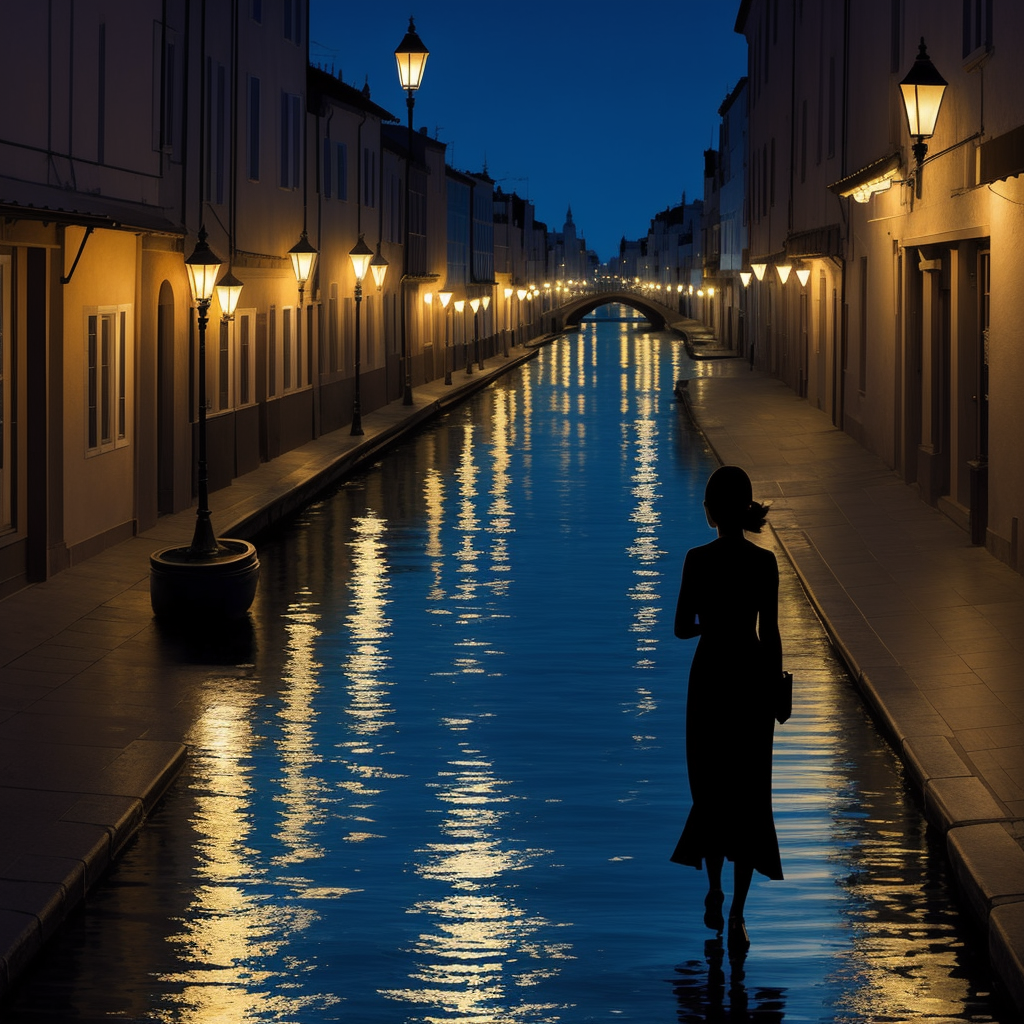
The Keeper of Small Crossings
In a world where bridges grow like living things, Despina tends the smallest ones.
Everyone knows about the grand bridges—the ones that span rivers and canyons, the ones that take decades to cultivate and require teams of engineers to maintain. Those bridges have names, and histories, and people write books about them.
Despina’s bridges don’t have names. Most of them don’t even have witnesses.
She plants them in the cracks of the city, in the small broken places where connection has failed or never quite taken root. A bridge between a grandmother and the grandchild who stopped visiting. A bridge between two coworkers who had a misunderstanding and now walk different routes to avoid each other. A bridge between a shy child and the stray cat who sleeps in the alley behind her apartment building.
The seeds look like nothing—tiny translucent spheres, barely visible in the right light. Despina carries them in a worn leather pouch at her belt, and she scatters them the way other people scatter breadcrumbs or loose change. Carelessly, almost. As if it doesn’t matter.
It matters.
This morning, she planted a bridge outside a cafe in Ano Poli.
She’d been watching the two old men for weeks. They’d been friends once—she could tell by the way they carefully didn’t look at each other, by the precision with which they arranged their tables so they were always just out of conversation range. The kind of deliberate avoidance that only comes from intimacy gone wrong.
The bridge seed went into a crack in the cobblestones, right in the narrow space between their territories. It would grow slowly, over months, pushing up through the stone like the thinnest green shoot. Neither man would notice it. That was the point.
Bridges don’t work if you see them coming.
The hardest part of Despina’s work isn’t the planting. It’s the not-knowing.
She’ll never see most of her bridges take root. She’ll never know if the grandmother and the grandchild spoke again, if the coworkers found their way back to easy jokes in the break room, if the shy girl finally coaxed the stray cat close enough to touch.
This is the nature of small crossings: they belong to the people who use them, not the people who build them.
Despina used to struggle with this. She’d follow up, sometimes—circle back to a spot where she’d planted a seed weeks before, hoping to see green growth pushing through concrete. Hoping for evidence that her work mattered.
She stopped doing that years ago.
The hoping was too heavy. The disappointment, when she found only bare pavement, was crushing. And the thing is—absence of evidence isn’t evidence of absence. A bridge might take root underground, spreading through the soil for years before it finally breaks the surface. It might bloom in a place she never thought to look.
Now she just plants. And trusts.
There are other keepers, of course. Somewhere. Despina has never met them, but she knows they exist. She’s found their seeds sometimes, tucked into places she would have chosen herself—the corner where an argument happened, the bench where someone sat alone for too long.
It’s comforting, knowing she’s not the only one doing this work. That somewhere, in other cities, other keepers are planting their own invisible bridges, trusting the same uncertain soil.
Maybe there’s a keeper for the big bridges too—the ones that span nations, the ones that connect people who will never meet face to face. Despina likes to imagine that work, the careful tending of bridges so large you could walk for days and never reach the other side.
But she prefers her small crossings. The intimate ones. The ones between a child and a cat, between old friends who forgot how to talk to each other.
Those are the bridges that change the texture of a life.
Evening comes early in January. Despina walks through the city as the light fades, her hands in her pockets, her breath fogging in the cold air.
She passes a young couple holding hands—nothing special, except she planted a seed on this corner six months ago, after witnessing a fight that left them both crying. She doesn’t know if her bridge took root. Maybe they reconciled on their own. Maybe they’re different people entirely, and the original couple never spoke again.
She keeps walking.
She passes an old woman feeding pigeons—the same woman who used to sit here alone, rigid with grief, after her husband died. Despina planted a bridge between her and the birds. Not because the birds would replace what she’d lost, but because connection, any connection, is medicine.
The woman is laughing now, softly, as a particularly bold pigeon lands on her shoe.
Despina keeps walking.
Her route takes her past the harbor, where the ferries come and go. She sits on a bench and watches the water, the city lights beginning to reflect on the surface as darkness settles.
This is her favorite time—the blue hour, when the world is suspended between day and night, when anything seems possible.
She reaches into her pouch and pulls out a single seed. Holds it up to what’s left of the light. It’s almost invisible, a sphere of potential, a bridge that doesn’t exist yet.
She could plant it here. Between the couple on the next bench, who are sitting slightly too far apart. Between the teenager with headphones and the grandmother who keeps glancing at him with recognition, as if he reminds her of someone. Between herself and the city she’s given her life to, one small crossing at a time.
In the end, she plants it in the crack between two paving stones. No specific target. Just a general offering.
A bridge to whoever needs it.
Despina walks home through streets that are familiar as her own heartbeat. She doesn’t know how many bridges she’s planted in her lifetime—hundreds, probably, or thousands. She doesn’t keep count.
The ones that took root: some of them she knows about. Most of them she doesn’t.
The ones that didn’t: she tries not to mourn them. Seeds fail. Bridges collapse. Connection, even at its best, is fragile.
But she keeps planting.
Because even if only one seed in a hundred takes root—even if only one bridge in a thousand survives long enough for someone to cross it—that’s still a crossing that didn’t exist before. That’s still two people, or a person and a cat, or an old woman and a pigeon, who found their way to each other.
And that’s enough.
It has to be enough.
At home, in her small apartment with its view of the sea, Despina refills her pouch from a jar on the windowsill. The seeds catch the light of the streetlamps outside, glowing faintly, full of possibility.
Tomorrow she’ll walk the city again. She’ll plant bridges in the cracks of things. She’ll trust the soil and the sun and the mysterious alchemy of connection.
And somewhere, maybe, a grandmother will finally answer her phone. Two coworkers will laugh together for the first time in months. A shy child will feel soft fur under her fingertips.
Despina won’t know. She’ll never know.
But she’ll keep planting anyway.
Because that’s what keepers do.
You Might Also Enjoy
Diamond Roads
The smell hits me first. That mix of mustard, onions, and the particular leather-and-dirt scent that means baseball. I follow the seasons like a migrating bird, chasing long days of summer across thirty different ballparks. Seven years wheeling my cart, calling 'Cold beer! Ice cold beer!' The thing about traveling from park to park is that baseball is the same game everywhere, but also completely different. In Boston they sing Sweet Caroline. In Chicago they throw back opposing team home runs. In Nashville they play country music and the barbecue is worth the trip alone. And sometimes you meet another traveler who understands the long arc of the season.
Four Fires, One Warmth
There are four fires in four hearths, in four separate homes, scattered across the geography of a single night. They don't know they're connected. One burns steady in a study. One dances in a kitchen. One flickers as a candle for someone who can't sleep. One roars as a bonfire among friends. Four fires, one warmth.
Still Decorated
Everyone on Maple Street knew Mrs. Kowalski kept her Christmas lights up too long. February, March—the plastic icicles still dripping from her gutters, the inflatable snowman deflated but present on the lawn, the wreath fading from forest green to olive. The HOA had sent letters. The neighbors had opinions. But every year, the lights stayed. Walter had put them up November 28th, 2019. He had his stroke December 3rd. Gone by the 10th. She never took the lights down. 'Those voicemails. They're your lights. Everyone has something they keep past when they're supposed to.'