Diamond Roads
Chapter One: The Vendor
Iris
The smell hits me first. Always does. That mix of mustard, onions, and the particular leather-and-dirt scent that means baseball. Doesn’t matter if it’s Fenway or Wrigley, Yankee Stadium or this little gem in Nashville—they all smell like summer and possibility.
I’m wheeling my cart down the concourse at First Tennessee Park, the Sounds playing the Omaha Storm Chasers on a Tuesday night in September. Most vendors stick to one stadium, one team, one routine. Me? I follow the seasons like a migrating bird, but instead of south for winter, I chase the long days of summer across thirty different ballparks.
“Cold beer! Ice cold beer!” My voice has that practiced projection that cuts through crowd noise but doesn’t quite become a shout. Seven years of this, and I know exactly how to make my voice carry to the guy in the red cap three sections over without startling the little girl counting peanuts in section 112.
The thing about traveling from park to park is that baseball is the same game everywhere, but it’s also completely different. In Boston, they sing “Sweet Caroline” in the eighth inning. In Chicago, they throw back opposing team’s home runs. Here in Nashville, they play country music between innings, and the barbecue is worth the trip alone.
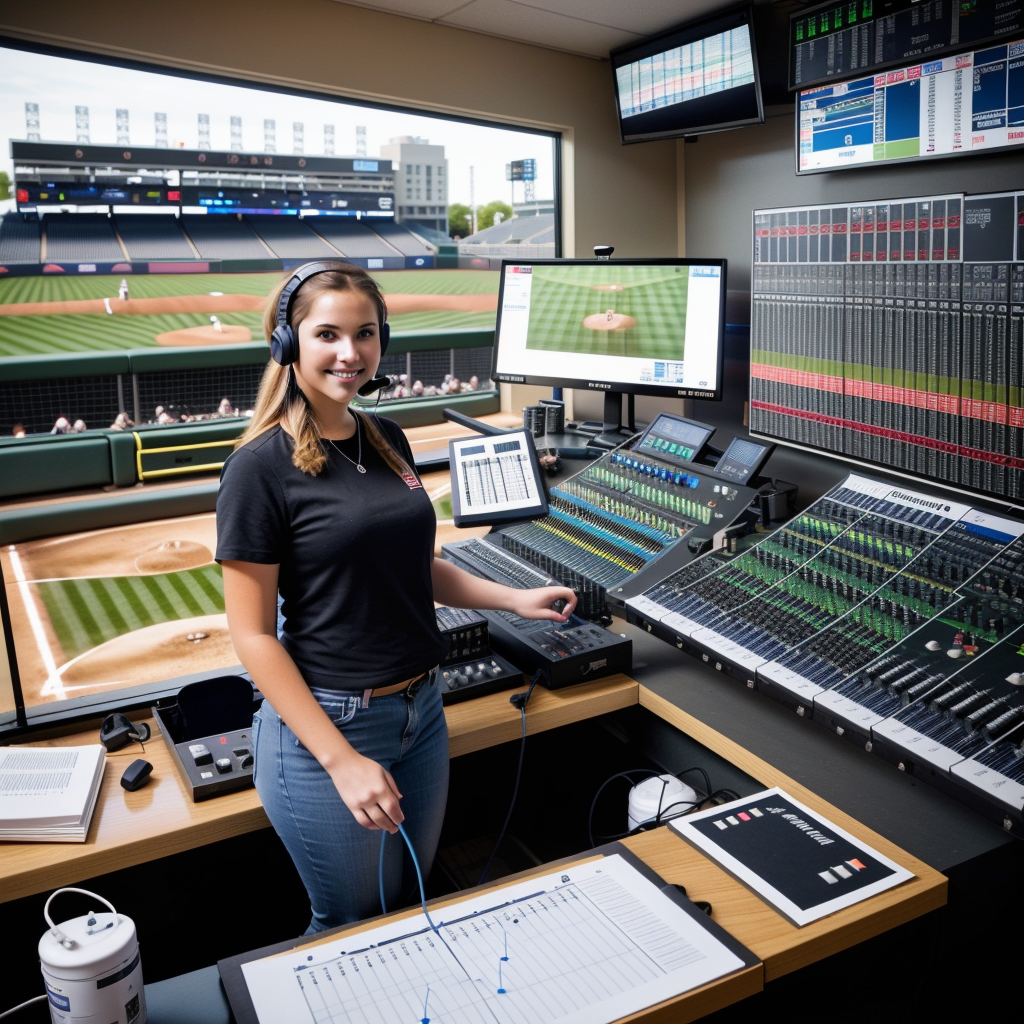
Between innings, I notice him. The guy with the headset and clipboard, standing near the sound booth. He’s watching the game, but not like the fans. His eyes track the rhythm of it—the pause between pitches, the seventh-inning stretch timing, the way the crowd’s energy shifts with the count.
I’ve seen him before. Not here in Nashville, but somewhere. Maybe Cleveland. Maybe Seattle. Hard to place a face when you see thousands of them, but something about the way he stands, the careful attention to details nobody else notices—that sticks with you.
Between innings, I roll my cart past the sound booth. He’s adjusting something, talking into his headset about audio levels and mic checks. When he glances up, there’s a moment of recognition that passes between us. Two people who understand that baseball isn’t just about the game—it’s about creating the experience, being part of the invisible machinery that makes the magic work.
“You follow the circuit too,” I say. Not a question.
He nods, removing his headset. “Jerry. Sound tech. I was in Louisville last week, Durham before that.”
“Iris. Beer and peanuts.” I gesture to my cart. “Phoenix, then Albuquerque, then here.”
We watch the inning unfold together for a moment. The batter works the count full, fouls off three pitches, then drives a double into the gap. The crowd rises, that collective intake of breath and release that means possibility, that means the game just shifted.
“You ever think about what we see that they don’t?” Jerry asks, nodding toward the stands.
I know exactly what he means. The fans see the game. We see the season. The long arc of 162 games, the rhythm of cities, the way August heat feels different in Phoenix than it does in Detroit. We see the same players grow and change over months, not just one night.
“The connections,” I say. “How it’s all connected.”
Chapter Two: The Sound Tech
Jerry
Memphis in September. The Redbirds are playing the Iowa Cubs, and I’m running a full sound check at 5 PM while the grounds crew finishes dragging the infield. AutoZone Park has good acoustics—high enough walls to contain the sound, but not so enclosed that everything echoes like a tunnel.
I’ve been doing this for twelve years now, following minor league baseball from March through September, city to city, ballpark to ballpark. Most people don’t think about the sound guy. They notice when something goes wrong—when the national anthem cuts out, or when the walk-up music is too quiet. When everything works right, I’m invisible, which is exactly how I want it.
But being invisible means you see things. You notice the patterns.
Like how every ballpark has its own personality that comes through the speakers. In Sacramento, the sound bounces off the warehouse beyond left field. In Norfolk, there’s a weird dead spot near first base where acoustic shadows eat the middle frequencies. Here in Memphis, the sound is warm and full, like the air itself is holding onto the notes.
I’m testing the seventh-inning stretch music when I spot her. The beer vendor I met in Nashville two nights ago. Iris, pushing her cart along the first-base concourse, calling out to the crowd filtering in for the early game of tonight’s doubleheader.
There’s something about running into someone from the circuit in a different city. It’s like finding a piece of home in a place that’s not quite home, or maybe finding proof that home isn’t a place at all—it’s the people who understand the rhythm of what you do.
The thing is, when you follow the minor leagues like this, you start to understand baseball in a way that’s different from the big leagues. These players are all hungry. Some are eighteen, playing their first professional season. Others are thirty-two, holding onto the dream with fingernails and determination. Some will make it to The Show. Most won’t. But every night, they play like everything depends on it.
And the cities—these aren’t New York or Los Angeles. These are places like El Paso and Fresno, Columbus and Chattanooga. Places where the ballpark is the biggest entertainment in town, where families come out on Tuesday nights in September not because they’re die-hard fans, but because it’s what you do. It’s community.
During the seventh-inning stretch, I play “Take Me Out to the Ball Game” like I have in forty-seven different cities this season. But tonight, as the crowd sings along, I’m thinking about what Iris said in Nashville about connections. How we see the long arc of the season while most people only see one game.
From my booth, I can see the whole ballpark. I know the regular season ticket holders by now—the elderly couple in section 108 who brings their own cushions, the teenager in the left-field bleachers who charts every pitch, the family with three kids who always leaves in the eighth inning to beat traffic.
But more than that, I see how the music shapes the experience. How the right walk-up song can give a struggling hitter confidence. How the seventh-inning stretch creates a moment where twenty thousand strangers become a community.
After the second game ends—home team wins 7-4 in eleven innings—I’m breaking down my equipment when Iris appears at the bottom of the booth stairs.
“Good doubleheader,” she says.
“You worked both games?”
“Different crowds, different energy. The early crowd was mostly families. Late crowd was serious fans who wanted to see good baseball.” She shifts her empty cart. “You heading anywhere specific next?”
“Little Rock tomorrow, then maybe Tulsa. Season’s winding down.”
“Same. Though I might follow the Arizona Fall League if the money’s right.”
We walk out together, past the empty concourses and darkened concession stands. The cleaning crews are already at work, preparing the ballpark for tomorrow night, when it will all happen again.
“You know what I love about this?” Iris says as we reach the parking lot. “It’s the same game everywhere, but it’s completely different every time.”
I think about the sound check I’ll run tomorrow in Little Rock, how I’ll adjust the EQ for different acoustics, different air temperature, different crowd expectations. Same job, different variables. Same game, infinite possibilities.
“See you down the road,” I say.
“Count on it.”
She drives away, taillights disappearing into the Memphis night, heading toward whatever city calls to her next. I pack up my van with twelve years of experience and tomorrow’s uncertainty. Somewhere out there, in Little Rock or Tulsa or Round Rock, there’s a ballpark waiting for the magic we help create.
The diamond roads stretch out ahead of us, connecting cities and seasons, stories and songs, all of us traveling toward something we can’t quite name but recognize when we find it.

You Might Also Enjoy
Four Fires, One Warmth
There are four fires in four hearths, in four separate homes, scattered across the geography of a single night. They don't know they're connected. One burns steady in a study. One dances in a kitchen. One flickers as a candle for someone who can't sleep. One roars as a bonfire among friends. Four fires, one warmth.
Still Decorated
Everyone on Maple Street knew Mrs. Kowalski kept her Christmas lights up too long. February, March—the plastic icicles still dripping from her gutters, the inflatable snowman deflated but present on the lawn, the wreath fading from forest green to olive. The HOA had sent letters. The neighbors had opinions. But every year, the lights stayed. Walter had put them up November 28th, 2019. He had his stroke December 3rd. Gone by the 10th. She never took the lights down. 'Those voicemails. They're your lights. Everyone has something they keep past when they're supposed to.'
The Architecture of Remembering
Not everything that thinks knows it is thinking. Beneath a city that had forgotten its own name, there was a system — corridors carved by repetition, junctions that sorted without judging, a deep dark place where patterns played.