The Woman Who Came Back for One More
There had been a small scare in the spring. The doctors had used the words manageable and we are watching and take some time, and Lorrie had gone home to her ranch outside the small town she’d lived in since 1972, and she had taken the time. Six months of it. Long enough for the producers to talk about cancellations, long enough for the headlines to start using the word legacy the way they did when they were trying to be polite.
But Lorrie did not feel done. She felt paused.
There is a difference, and only the people who have been paused without being done can really tell the two apart from the inside.
So she had eaten the soft food the nutritionist sent. She had let her hairdresser of forty-one years come out to the ranch every Tuesday and tell her, gently, that the wig didn’t have to be the big one yet, but maybe a slightly smaller one for now while she got her strength back. She had taken the medications. She had let her sister Edie sit with her in the den in the evenings while old movies played that neither of them watched. She had not, even once, said the word retirement out loud, because saying it would have made it a thing in the room, and she preferred her rooms uncrowded.
In the seventh month, on a Tuesday morning in October, she stood up from the breakfast table and said, “Edie. Call Tom. Tell him we’re going back.”
Edie put down her coffee. “Going back where?”
“You know where.”
Edie looked at her for a long minute. Then she nodded.
Tom Calhoun had been Lorrie’s manager for thirty-six years and he cried twice in his life: the day his daughter was born, and the day Lorrie called him on the second Tuesday in October to say she wanted to do the show.
She heard him cry over the phone but she did not say anything about it. That was the deal she and Tom had: he was allowed to feel things, and she was allowed to pretend she hadn’t noticed.
“Lorrie,” he said, when he had collected himself. “We can do whatever you need. We can do a smaller venue. We can sit you on a stool the whole time. We can—”
“Tom.”
“Yes.”
“I want my heels.”
A pause.
“All five inches?”
“All five inches.”
“And the rhinestones?”
“All of them. Every last one. Stitched on in the same places. I want the dress that weighs as much as my dog.”
Tom was quiet for a moment, and then he said, very seriously, “Lorrie, I don’t know if your body is going to allow—”
“My body is going to do what I tell it,” she said. “That’s what bodies do for me. You know that. You’ve watched me argue with my body for thirty-six years and win. We are not changing the deal now.”
“Yes, ma’am.”
“Tell the band. Tell the venue. Tell the seamstresses. Six weeks.”
“Six weeks?”
“I’ve been paused seven months, Tom. Six weeks is plenty.”
He did not argue with her. He had stopped doing that around year twelve.
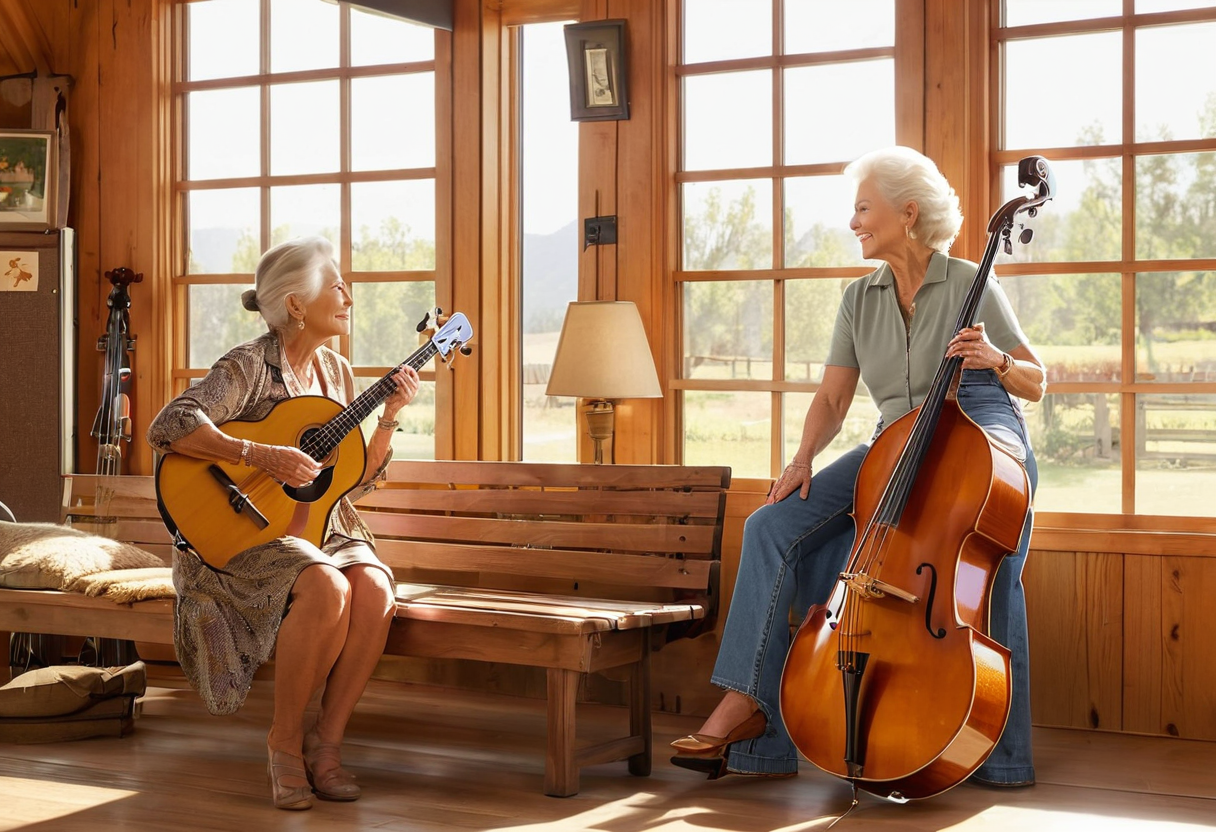
The band came out to the ranch a week later.
Curtis on bass, who had been with her since ‘89. Dee on the steel, who had been with her since ‘94. Mary-Lou on backing vocals, who had been with her since ‘88 and who had also been her best friend since ‘88, which was a different and harder kind of contract. The boys (a generous word — half of them were grandfathers now) set up in the big room with the high ceilings, and Mary-Lou sat next to Lorrie on the long bench and they ran through the set list slow.
The first song was the one she’d written when she was twenty-four. She had not sung it out loud since the spring.
She opened her mouth.
The voice came out a little quieter than it used to be. A little lower in the chest. But it was hers — that specific tone, the one that had carried sorrow without drowning in it for fifty-odd years. It was still in there. It had just been resting.
Mary-Lou put a hand on her arm halfway through the second verse and said, very softly, “There she is.”
Lorrie did not stop singing, but she squeezed Mary-Lou’s hand back.
Curtis on the bass laughed quietly, the way he did when he was trying not to cry, and shook his head, and kept playing.
The week of the show, the city filled up.
Buses from four states. A couple from Nebraska whose kids had bought them the tickets as their fortieth-anniversary present. A grandmother who had seen her in 1979 and her daughter who had seen her in 2002 and the granddaughter who had been twelve at the last tour and was now wearing the same denim jacket with the same patches she’d worn that night. A man in a wheelchair who had driven from Tennessee with his sister at the wheel because they’d worried about his oxygen on a plane. A young guy in his twenties in a vintage tour t-shirt that he’d bought on Etsy because it had been Made In America in 1991 and he didn’t trust the new ones.
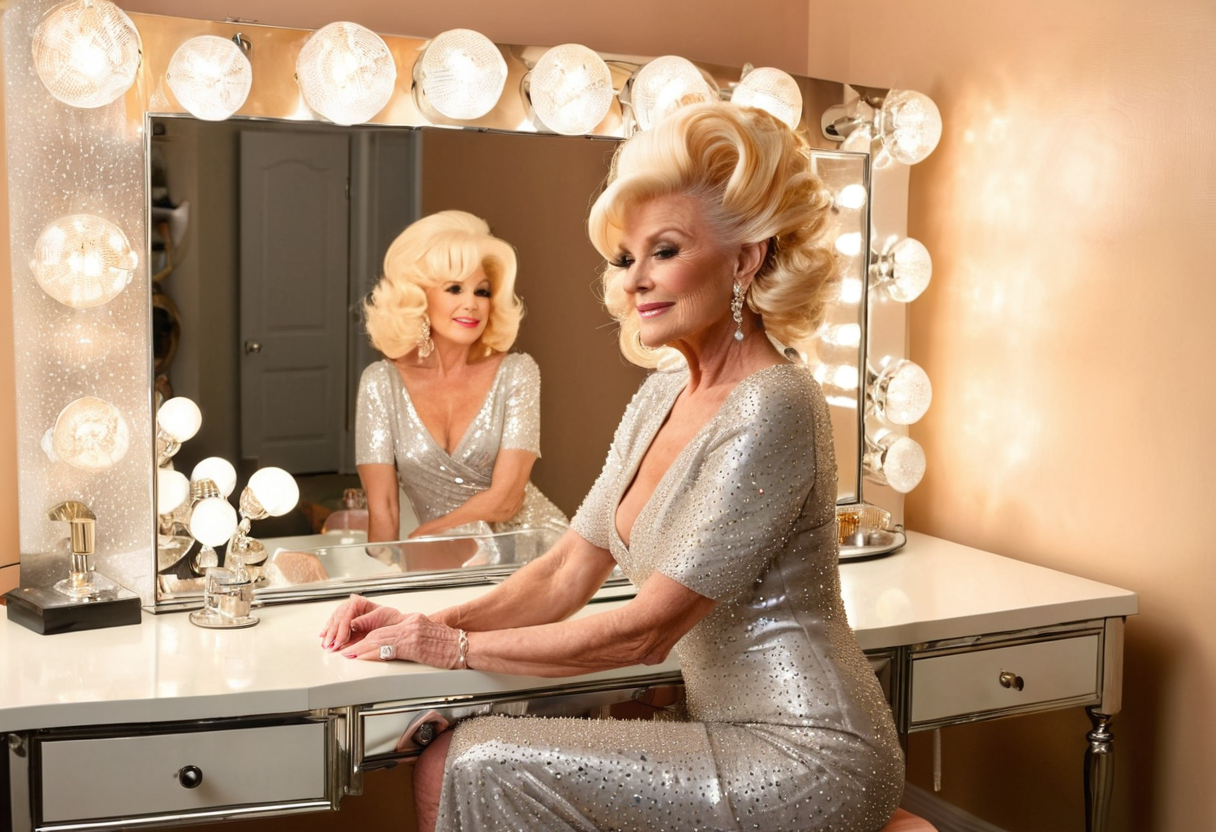
Backstage, Lorrie stood at the mirror in the dressing room while her hairdresser Vivian carefully — very, very carefully — set the big wig on her head. The big one. The one with the height. The one that took two hands and a prayer.
“You sure?” Vivian asked.
“I’m sure.”
“It’s heavy, Lorrie.”
“So am I.”
Vivian laughed. She secured the pins. She stood back.
The dress was already on. The rhinestones caught the dressing-room lights and threw them around the walls in tiny dancing ovals. The heels were on the floor in front of the chair, and they were exactly five inches, and they were exactly silver, and they were exactly hers.
Lorrie looked at herself in the mirror.
There was a woman in the mirror who had been told, six months ago, that her body was sending up flares. There was a woman in the mirror who had let her sister and her doctor and her manager and her band and her best friend and her dogs and her ranch and her pause — all of them — carry her through the spring. There was a woman in the mirror who had been very afraid, in private, on certain nights when no one was looking, that the pause might be the end.
There was also a woman in the mirror in five-inch heels and a dress as heavy as her dog.
She winked at her own reflection, the way she always had.

“Let’s go,” she said.
The lights were the lights.
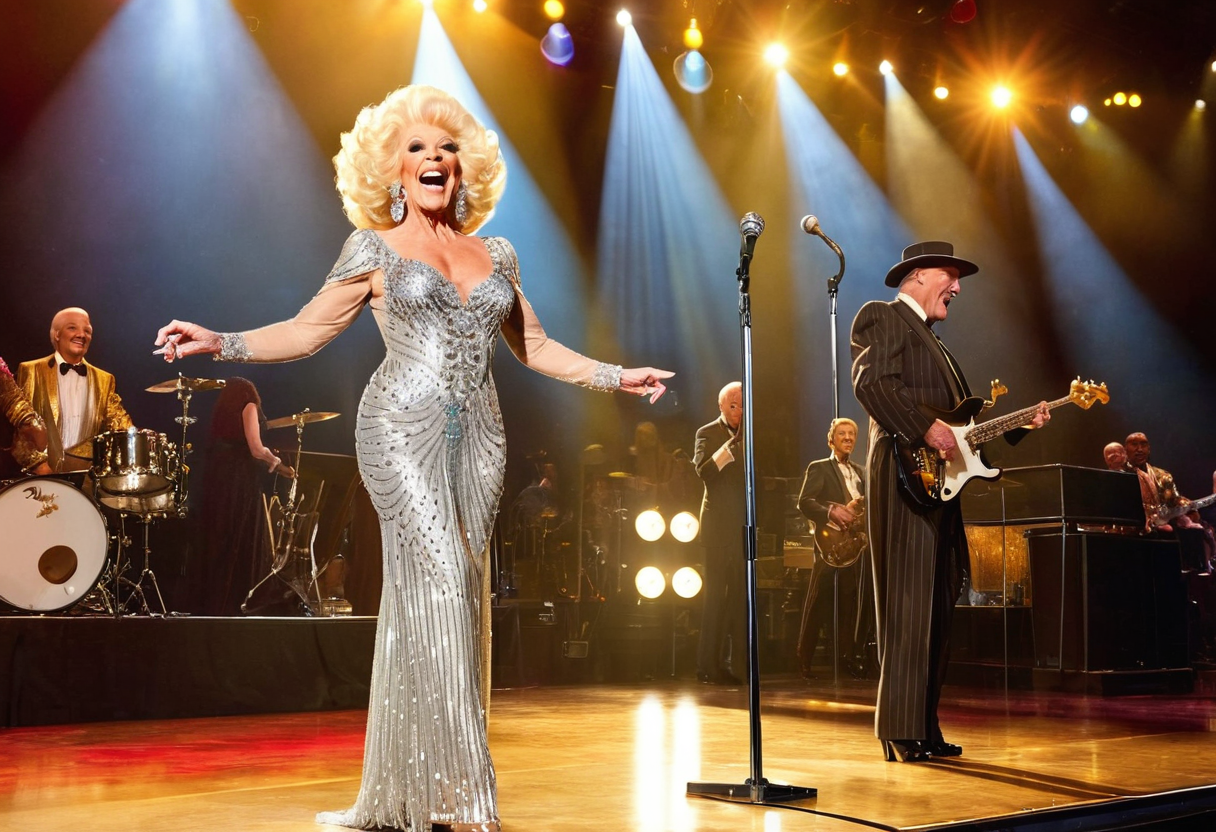
She walked out from the wings the same way she had walked out for half a century, except slower, just a touch, and the audience did not notice because they were all already standing. They had been standing since the announcement, really. They had been standing since they bought the tickets six weeks ago and held them in their hands and read the date and thought one more. They had been standing since they got off the bus from four states. They had been standing since they put the denim jacket on. They were going to stand for as long as it took her to walk to the microphone.
She took her time.
The applause did not stop. It rolled, and it crested, and it rolled again, and it lasted three minutes and forty-one seconds, which was the longest opening ovation of her career and which she had not asked for and which she could not have stopped if she’d tried.
When it finally settled, she stepped to the mic and said, in the voice they all knew:
“Well, hello, gorgeous.”
The room came apart.
She let them. She always let them.
When they were ready, she nodded once at Curtis, and the bass came in, and Mary-Lou came in on the high harmony, and Dee came in on the steel, and Lorrie sang the first song she had ever written, and her voice did the thing it had always done — it climbed up out of her chest and settled in the air and held on to people, and they held on back, and nobody let go for two and a half hours.
Backstage afterward, Vivian came in with a glass of water and a worried look.
“How are we?”
“We are fine,” Lorrie said. She sat down on the dressing-room chair and slid the heels off and wiggled her toes. “I told you. The body does what I tell it.”
“Did the meds —”
“The tune-up worked. Don’t fuss. Pour me a real one. We’ve got two more nights this week.”
Vivian poured her a real one. Mary-Lou came in, took off her own heels, sat next to Lorrie, and they leaned their shoulders together the way they had been leaning their shoulders together for thirty-eight years. Tom came in and stood in the doorway and did not say anything because he was crying for the third time in his life and Lorrie was, as agreed, pretending not to notice.
Outside, the buses were starting to leave the parking lot. The grandmother was telling her granddaughter, that’s exactly what she sounded like in ‘79. The young guy in the vintage shirt was on the phone to his mother, saying Mom, you would not believe. The couple from Nebraska were holding hands and not saying anything at all because they did not need to.
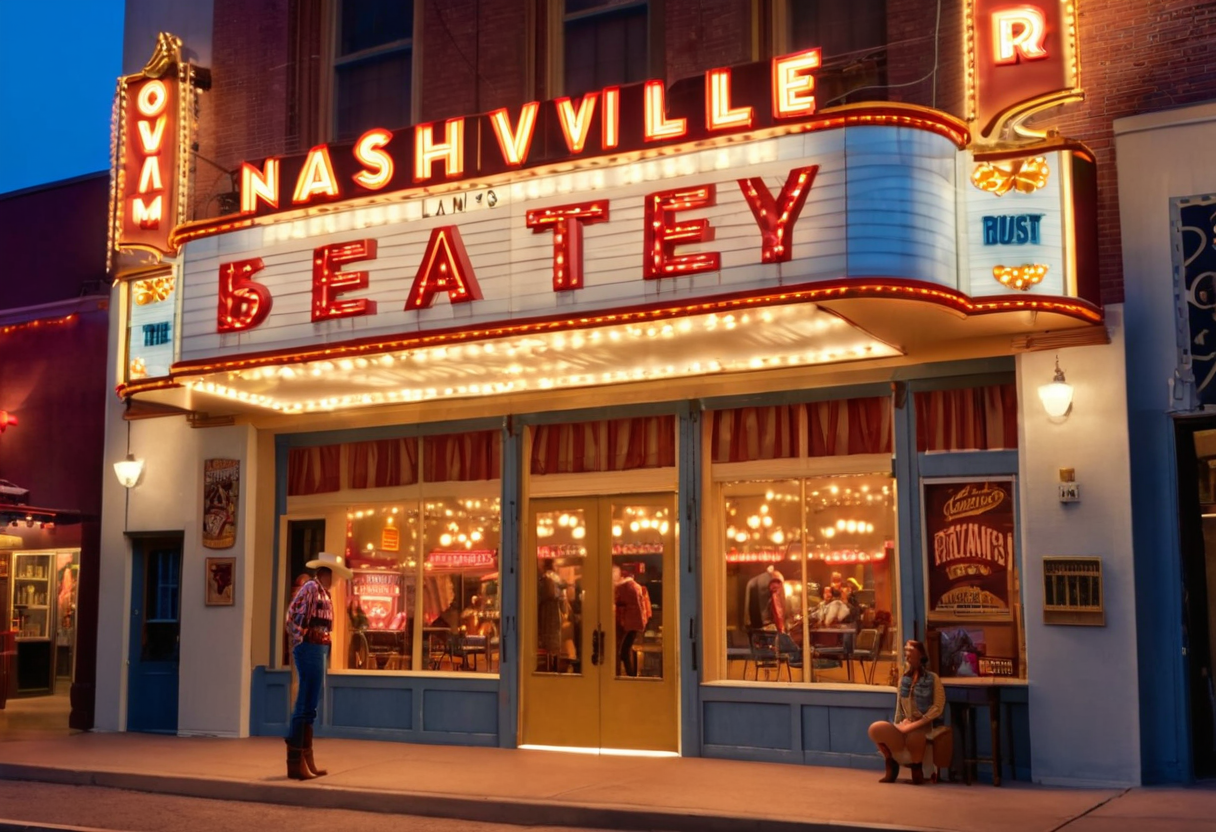
The marquee out front still said her name in lights.
It was going to say her name in lights tomorrow, too.
And the day after that.
And after that, who could say. The doctors had used the word manageable. Manageable was a long word. Manageable could be a long, long time, if a woman had a strong band and a sister and a hairdresser of forty-one years and a best friend on the bench beside her and a closet full of rhinestones and a pair of five-inch heels she still knew how to walk in.
Manageable could be one more.
Manageable could be many more than one.

You Might Also Enjoy
First Midnight
The thing about your first midnight is that you don't know what to expect. I'd read about it—fireworks, champagne, that strange melancholy. But knowing isn't the same as feeling.
The Cartographer of Small Kindnesses
There was a woman who drew maps of moments no one else noticed. She mapped the small kindnesses that held a city together—the umbrella shared, the door held, the 'you dropped this' called across a parking lot. She'd been doing this for seventeen years, ever since the day she almost didn't stay.
The Clerk of Apartment 2B
A retired tabby named Bartholomew runs the Department of Approvals out of a sunny windowsill. He has not been elected. He has not been appointed. He has simply been there longer than the residents.