The Negotiator of Small Signals
Patel’s business card said “AV Consultant” but what she actually did was lie.
Not big lies. Not fraud or deception or anything that would get her arrested. Small lies. Precise lies. The kind that made two pieces of incompatible equipment believe they were speaking the same language when, left to their own devices, they would simply stare at each other in confused silence until someone unplugged everything and called her.
Her phone rang at 11 PM on a Saturday, which was not unusual. The unusual part was that it was the symphony.
“The projector won’t talk to the new media server,” said a voice she recognized as Julian, the technical director. He sounded like a man who had already tried everything reasonable and was now entering the territory of the unreasonable. “We have a dress rehearsal in thirteen hours.”
“What’s the projector seeing?”
“Nothing. Black screen. The media server is sending signal, the cables are good, the routing matrix shows green across the board. But the projector just sits there like it’s been personally offended.”
“HDMI or SDI?”
“HDMI. The new media server only has HDMI out. The old one had SDI and never gave us a single problem in eight years.”
“Of course it didn’t. SDI doesn’t negotiate. It just sends.”
“Can you be here in thirty minutes?”
She could, and she was.
The symphony hall’s projection booth was a narrow room above the balcony that smelled like dust and ozone. Julian had left the door propped open with a fire extinguisher, which told Patel everything she needed to know about his current stress level.
The media server was a sleek black box, brand new, expensive, and absolutely certain that it was doing its job correctly. The projector was a twelve-thousand-lumen beast that had been bolted to the ceiling since 2019 and had opinions about what kind of signal it would accept.

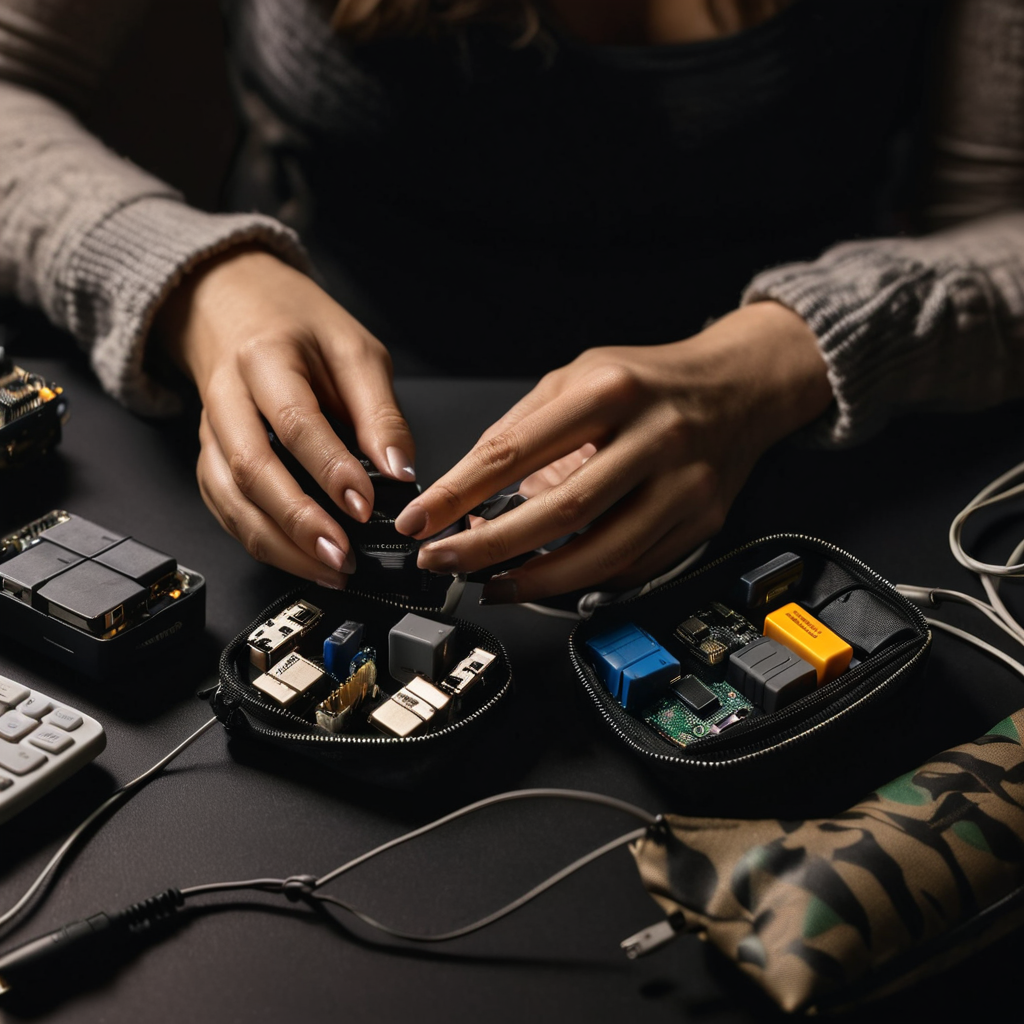
Patel opened her bag. Inside, organized in labeled pouches, were forty-seven small devices, each designed to sit between two pieces of equipment and adjust one tiny aspect of the conversation between them. EDID managers. Signal attenuators. Fiber converters. HDCP strippers for equipment that didn’t need copy protection but insisted on asking for it. Embedders, de-embedders, scalers, and one device she’d built herself from a Raspberry Pi that existed solely to add a three-frame delay to solve a lip-sync problem at a church in Roanoke.
“The media server is outputting 4K60 HDR,” she said, reading the info screen. “Your projector is from 2019. It wants 1080p, no HDR, and it’s not going to negotiate upward.”
“So the media server needs to output 1080p?”
“The media server can’t be told to output 1080p. It queries the display, reads the EDID — that’s the little handshake where the display says ‘here’s what I can do’ — and then sends the highest format both sides support. But your projector’s EDID is old and incomplete. It doesn’t properly report its limitations, so the media server guesses wrong. It sends 4K HDR. The projector gets confused. Black screen.”
Julian pinched the bridge of his nose. “So we need a new projector.”
“You need this.” Patel held up a device slightly larger than a thumb drive. It had an HDMI plug on one end and an HDMI socket on the other. Between them lived a chip that contained exactly one useful piece of information: a curated EDID that told the media server, clearly and precisely, what the projector actually wanted.
She plugged it into the chain between the media server and the cable run to the projector. Three seconds later, the projected image bloomed across the curved screen behind the stage — clean, bright, perfectly formatted.
Julian stared at it. “What did that thing cost?”
“Twenty-two dollars.”
“We spent four hundred thousand dollars on the media server.”
“And nineteen dollars of that was the HDMI output chip that doesn’t know how to have a polite conversation with equipment from 2019. The twenty-two-dollar device teaches it manners.”
Patel drove home through empty streets, her bag of small devices on the passenger seat. She thought about what she actually did for a living and why she was good at it.
Every system she’d ever worked on was built by smart people who assumed their equipment would talk to other equipment built by equally smart people who made the same assumptions. And they were always right — as long as everyone’s assumptions matched.
They never matched.
The projector assumed all sources would announce themselves properly. The media server assumed all displays could handle its best output. The symphony assumed buying expensive equipment meant it would work. And somewhere in between all these reasonable assumptions was a gap just wide enough for everything to fail.
Patel lived in that gap.
She didn’t fix things, exactly. The equipment wasn’t broken. She didn’t build things — the systems were already built. What she did was narrower and stranger: she negotiated. She sat between two systems that couldn’t understand each other and said, on behalf of one, something the other needed to hear.
Sometimes the thing she said was true. Sometimes it was a simplification. Sometimes it was, technically, a lie — a curated version of reality that sacrificed accuracy for function. “I am a 1080p display,” said the EDID manager, when really it was sitting in front of a 4K projector. But the lie made everything work. The truth — the full, complicated, badly formatted truth — made everything fail.
There was a philosophy in that, she thought, though she wouldn’t have called it philosophy. She would have called it “knowing which lie to tell.”
Her phone buzzed. A text from a client she’d helped three months ago: The church screens are still working perfectly. You’re a miracle worker.
She smiled. No miracles. Just a three-frame delay and an EDID override and the knowledge that sometimes the most important thing in a conversation isn’t what’s being said — it’s what each side needs the other to believe.

You Might Also Enjoy
The Architecture of Remembering
Not everything that thinks knows it is thinking. Beneath a city that had forgotten its own name, there was a system — corridors carved by repetition, junctions that sorted without judging, a deep dark place where patterns played.
The Clock That Stopped for a Reason
The mantel clock arrived on a Tuesday, carried in by a woman who set it down on Lior's workbench with both hands, the way people carry something that is half-object, half-witness.
The Desk That Stayed
The workbench was eight feet long, built from eastern white pine that had gone the color of dark honey over decades of oil and turpentine soaking into the grain. Three people worked at that bench across fifty years. None of them planned it that way.