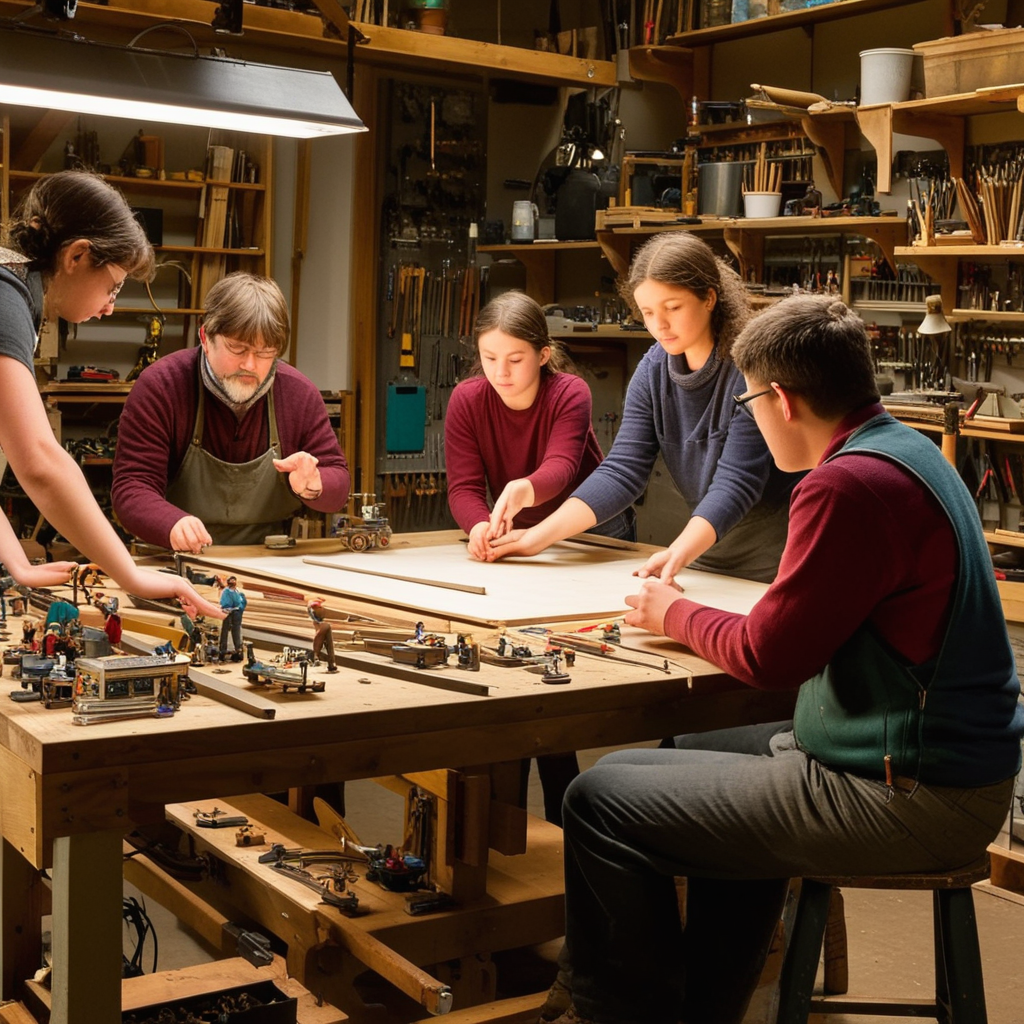
The Exile: The Reckoning
A Council member showed up at Maren’s workshop on a Friday afternoon, rain-soaked and desperate.
She didn’t recognize him at first. His uniform was still crisp, still official, but something had broken in him. He stood in the doorway like a man at a threshold between two worlds, unable to commit to either.
“The heating system,” he said without preamble. “The one you proposed. Five years ago.”
Maren set down her tools. She’d been teaching three students how to machine a valve chamber. She took the man outside to talk.
“What about it?” she asked.
“It would have made a 40% efficiency gain across the entire city network. You know that. I know you know that. We rejected it. Said it was too radical. Too much of a departure from tradition.” He laughed bitterly. “Tradition. We called it efficiency. You called it progress.”
He pulled a folder from inside his coat, handling it like it might burn him. “The system is failing now. Failing comprehensively. Three district branches went down last month. The Council is fracturing. Mechanics are leaving. People are cold. And the thing you designed — we pulled the specs from the archives. It would solve everything. But we never gave you the chance.”
Maren looked at the folder but didn’t take it. “So the Council sent you to apologize?”
“The Council doesn’t know I’m here.” He dropped the folder on her workbench. “I came because I voted to expel you. I was one of the six who reviewed your case. I looked at the harassment report for maybe five minutes before voting yes. I told myself the Council had bigger concerns. That the disruption wasn’t worth the trouble. That sometimes you have to sacrifice individuals for institutional stability.”
He looked at her directly then. His eyes were hollow. “Institutional stability. That’s what I was protecting when I voted to throw you out.”
Maren didn’t answer immediately. She thought about that Tuesday, about standing in the rain, about the relief she’d felt. She thought about her students in the workshop — people the Council had rejected too. People it had called “unsuitable.” They were learning faster, advancing further, innovating more than they would have in twenty years of Council training.
“Why are you telling me this?” she asked.
“Because you have a choice now,” he said. “The same choice the Council doesn’t even realize we have. You can let us fail. You can sit in your workshop, build your designs, teach people like us nothing. Let the city freeze. Let the system collapse under its own weight. And you’d be right to. We threw you away.”
He stepped closer. “Or you can be better than we were.”
Maren wanted to tell him that wasn’t her responsibility. That she’d already moved on. That survival wasn’t about maintaining institutions that poisoned you.
Instead, she looked back into the workshop at her students working the valve. At the teenager who’d been kicked out for asking questions. At the older woman rejected for lacking credentials. At the man with a limp who’d been deemed “not Guardian material.”
“What would it look like?” she asked. “If the Council wanted help?”
The man’s eyes widened. “You’d consider it?”
“I’d consider teaching you,” Maren said carefully. “Not saving the Council. Not validating the system that expelled me. But if there are people in the system who want to learn what we’ve learned — how to think differently, how to build better, how to actually serve people instead of protecting procedures — then maybe there’s work to do.”
She went back inside and called her students over. “This is going to sound strange, but I need to ask you something. Would any of you be willing to teach people from the Council? Not defer to them. Not re-join their hierarchy. But actually teach them?”
The teenager looked suspicious. The older woman looked thoughtful. The man with the limp smiled slightly.
“Only if they listen,” he said. “Not because of their titles, but because they actually want to learn.”
Maren turned back to the Council member. “We’ll help. But here’s what changes. Everyone learns together. No hierarchy. No credentials mattering more than understanding. And you teach what you learn to others. The only way the system changes is if it learns differently from the ground up.”
Over the next months, something unexpected happened.
The Council members who came to learn didn’t come seeking redemption. They came because their system was breaking, and they were desperate enough to be humble. Some arrived bitter, some defensive, but all of them arrived ready.
Maren taught them how to think laterally. How to question tradition without destroying it. How to innovate without pretending the old ways were worthless — just incomplete.
Her students taught them too. The teenager showed them how to ask questions without fear of consequences. The older woman taught them that experience and credentials were different things. The man with the limp taught them that limitations could birth creativity if you refused to accept the limiting person.
The Council members learned. Actually learned.
And slowly, something shifted. Not redemption — Maren didn’t believe in redemption. Redemption meant the past could be healed, and some things couldn’t. But transformation. Growth. The possibility that people could change if they were willing to die to who they’d been.
Some Council members couldn’t make that journey. Some left, clung to hierarchy, tried to rebuild the old system. But others stayed. They went back to the Council and advocated for different approaches. They fought for the heating system design. They began hiring people based on ability instead of credentials. They started — slowly, painfully slowly — to build something better.
The city didn’t transform overnight. Change never does. But it began.
A year after the Council member’s rain-soaked visit, Maren stood in her workshop watching three separate groups work on three different projects. Her original students. Council members learning to think differently. New apprentices — people who’d been rejected everywhere else.
The teenager had opened a second workshop on the east side of the city.
The older woman was training younger women in advanced mechanics, proving that her “lack of credentials” had been the system’s loss, not hers.
The man with the limp had been hired by the Council not despite his limp, but because he thought differently about accessibility and design.
Maren moved between the groups, answering questions, asking better ones. She didn’t think about vindication anymore. She didn’t think about the Council’s reckoning. That had happened the moment they realized they’d expelled the wrong person.
What she thought about now was the work. The act of building. The privilege of teaching people who wanted to learn. The quiet revolution of creating something better not because it would be acknowledged, but because it was right.
Through the workshop window, she could see the Council Hall in the distance. Its lights were brighter now. Its systems were being rebuilt. Some of the people rebuilding them were here in her workshop, learning how to think.
She’d had a choice once: let them fail or teach them better.
She’d chosen to teach.
And in choosing that, she’d discovered something the Council would never understand: that the greatest power isn’t in being needed, it’s in being free to choose generosity anyway.
Maren returned to the workbench, picked up her tools, and kept building.

You Might Also Enjoy
The Architecture of Remembering
Not everything that thinks knows it is thinking. Beneath a city that had forgotten its own name, there was a system — corridors carved by repetition, junctions that sorted without judging, a deep dark place where patterns played.
The Butterfly Café: Winter Wings
The first snow fell on a Tuesday, and Thomas watched it through the Butterfly Café's window with the expression of a man watching his own funeral.
The Muscle Remembers
The arthritis had taken her Chopin. Then her Debussy. Last month, it took her Beethoven. But Professor Catherine Walsh's hands weren't done yet—they were just teaching differently now.