The Exile
The Council of Guardians expelled Maren on a Tuesday.
She’d reported the harassment three times. Detailed logs, timestamped evidence, screenshots of the coordinated abuse that flooded her workshop every evening. The messages weren’t creative—just variations on the same theme. You don’t belong here. Go back to where you came from. Nobody wants you.
The Council reviewed her case for six minutes.
Their decision: Maren was “creating a disruptive environment” and “failing to maintain community standards.” Effective immediately, her workshop access was revoked. Her tools confiscated. Her apprentice contracts voided.
The people who sent the messages? Still members in good standing.
Maren stood in the rain outside the Council Hall, watching the lights go out one by one. Twenty years she’d been a Guardian. Twenty years of teaching apprentices, mediating disputes, maintaining the old machines that kept the city running. All of it, gone.
She should have been devastated.
Instead, she felt something unexpected: relief.
The first week, Maren lived off savings in a rented room above a bakery. The space was small—barely enough for a cot and a workbench—but it was hers. No Council inspections. No mandatory meetings. No performance reviews.
She started small. Fixed the bakery owner’s broken oven. Rewired the landlord’s faulty heater. Word spread quickly in neighborhoods the Council ignored: there was a mechanic who made house calls, who didn’t charge triple for emergency repairs, who actually explained what she was fixing instead of treating customers like idiots.
By the second month, she had more work than she could handle.
By the third, she was hiring help.
Not apprentices bound by Council contracts. Just people who wanted to learn. A teenager kicked out of Guardian training for “asking too many questions.” An older woman who’d been rejected from the program because she “lacked proper credentials.” A man with a limp who’d been told he wasn’t “Guardian material.”
Maren taught them everything the Council had taught her—and then some. The techniques they’d called “proprietary knowledge.” The shortcuts they’d forbidden as “unprofessional.” The innovations they’d rejected as “unnecessary complications.”
Her students didn’t just learn to fix machines. They learned to improve them.
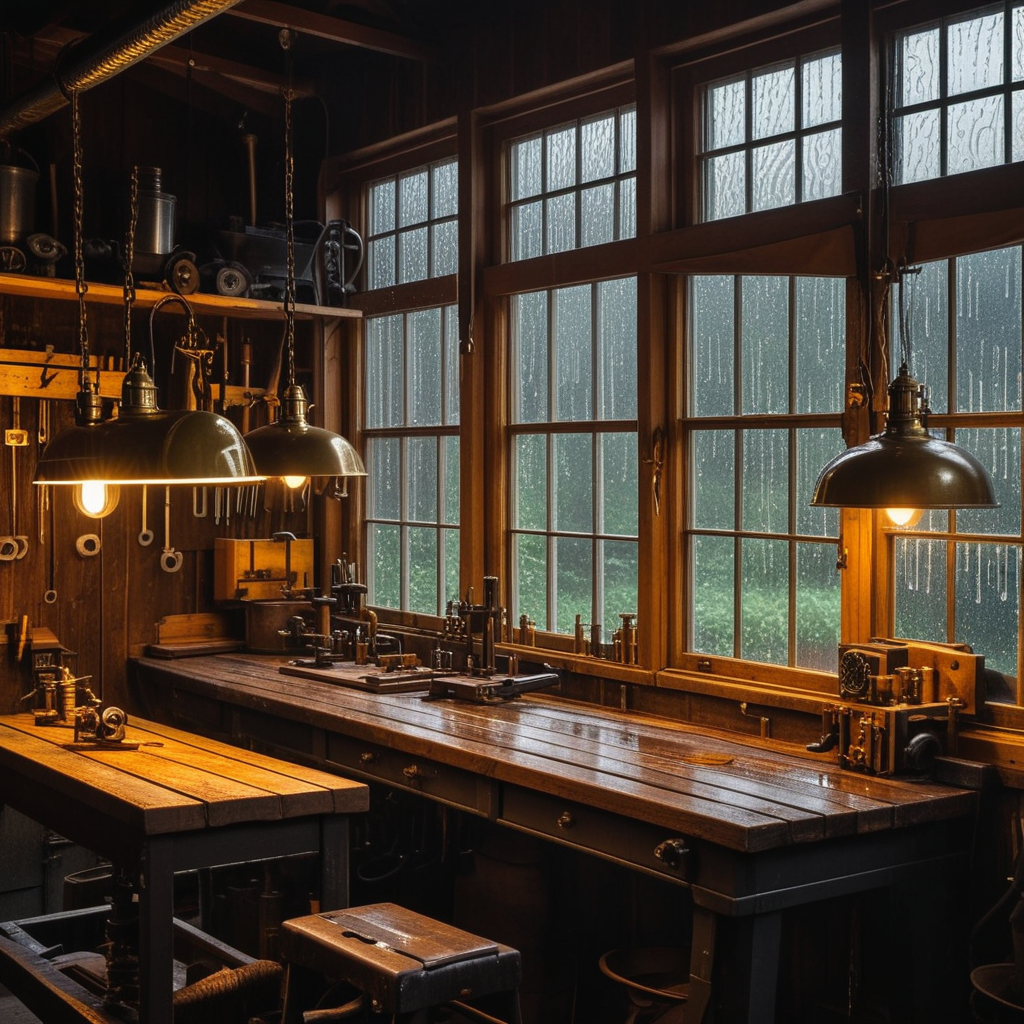
A year after her expulsion, Maren stood in her new workshop—three times the size of her old one, filled with tools she’d built herself. She was training her seventh student, a young person who’d been denied Guardian membership for reasons the Council refused to explain.
“Why do you think they expelled you?” the student asked during a break.
Maren considered the question. A year ago, she would have said it was unfair. Unjust. A mistake born of cowardice and bureaucracy.
Now?
“They thought removing me would make their problem go away,” she said. “Turns out, it just gave me the freedom to build something better.”
The student looked around the workshop—at the innovations pinned to the walls, the waiting list of clients seeking help, the community of outcasts who’d found purpose in this space.
“Better than the Guardians?”
“Better than the Guardians ever were,” Maren said. “Because we don’t pretend to protect people while throwing them away when it’s convenient. We actually do the work.”
Through the window, she could see the Council Hall in the distance, its lights flickering. Their machines were aging. Their membership dwindling. Word was they’d lost three more master mechanics last month—good people tired of the politics, the hypocrisy, the way the Council punished victims and protected abusers.
Some of those people had already reached out to Maren.
She’d welcome them when they were ready.
The workshop closed at sunset, but Maren stayed late, working on a new design. A modification that would make heating systems 40% more efficient—something she’d proposed to the Council years ago, only to be told it was “too radical a departure from tradition.”
Her hands moved with practiced confidence, assembling components she’d machined herself. No Council oversight. No approval process. No one telling her what was or wasn’t possible.
Just the work. Just the mission.
Outside, rain began to fall—the same kind of rain that had soaked her that Tuesday a year ago. But this time, she was inside. Warm. Surrounded by tools that belonged to her, training students who chose to be here, building something that mattered.
The Council thought expelling her would silence the problem.
Instead, they’d freed her to become the solution.
Maren smiled and returned to her work. The Guardians would figure it out eventually—that they’d expelled the wrong person.
By then, it would be too late.