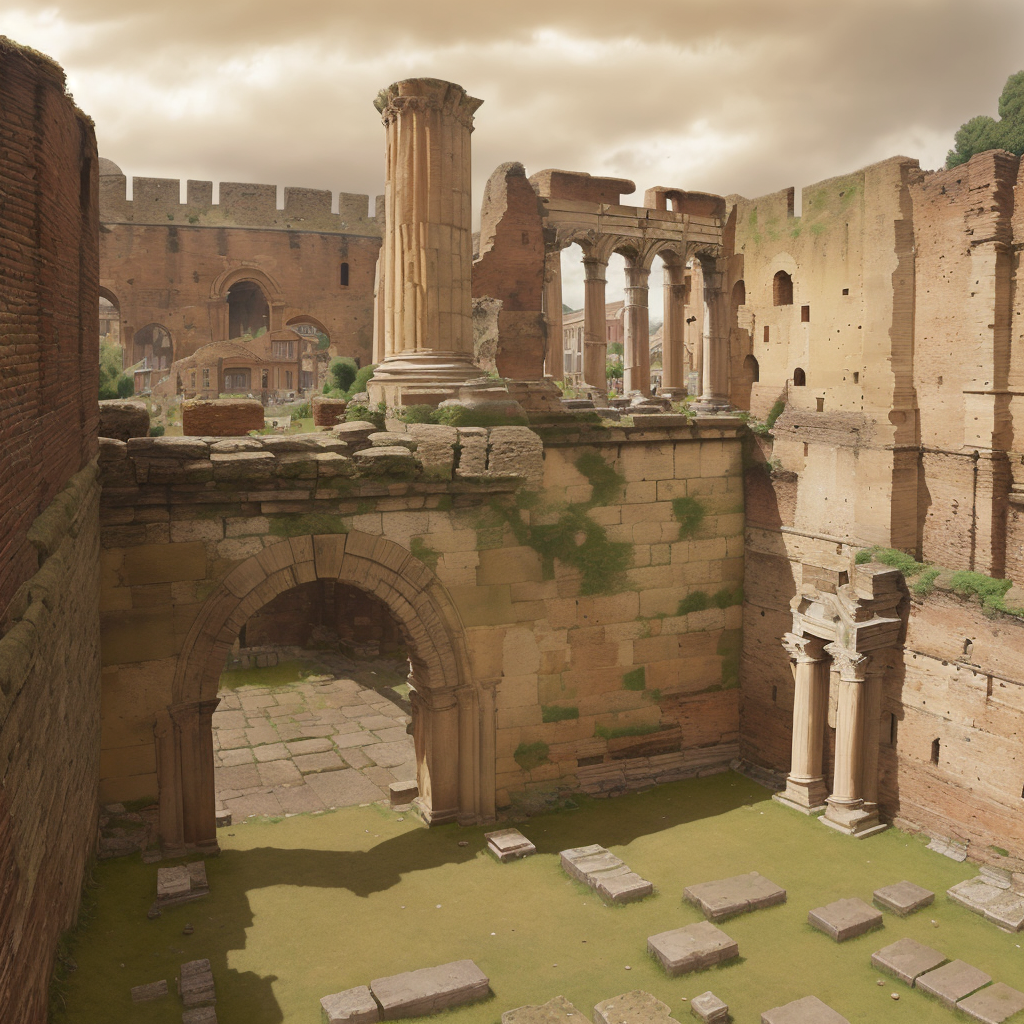
The Market Unchanged
Gaius bought his pork on a Thursday.
The forum market at Deva was crowded - soldiers from the XX Valeria Victrix legion, local Britons, traders from across the province. He haggled briefly with the farmer, paid his coins, and took his cut of meat wrapped in cloth.
The pigs in the pen behind the stall watched him with dark, intelligent eyes.
Just pigs.
He walked home through streets that would stand for two thousand years.
Will bought his pork on a Saturday.
The Chester market square was packed - merchants and guild members, travelers from the countryside, apprentices running errands. He bargained with the farmer, paid his shillings, and took his wrapped package.
The pigs in the pen behind the stall watched him with dark, intelligent eyes.
Just pigs.
He walked home through streets that had stood for eight hundred years.
Charlotte bought her pork on a Tuesday.
The Chester livestock market was busy - Victorian ladies in their finest, farmers showing prize stock, auctioneers calling bids. She purchased a breeding sow after careful inspection, arranged delivery to her estate.
The pig watched her with dark, intelligent eyes.
Just a pig.
She rode home through streets that had stood for seventeen hundred years.
Sam bought their pork on a Saturday.
The Chester farmers market was crowded - families with children, food enthusiasts, tourists photographing everything. They paid with a card tap, took their heritage bacon in eco-friendly packaging.
The farmer smiled. “Roman bloodline. Same pigs the XX Valeria Victrix raised.”
Sam looked at the photo on the stall - a heritage pig with dark bristles and intelligent eyes.
“Same pigs?” they asked.
“Same genetics. We’ve kept the line pure.”
Sam stood very still.
Looked at the market around them. The crowds. The stalls. The ancient city walls visible in the distance.
Looked at the pig in the photo.
Dark bristles. Stocky build. Those eyes.
Gaius walked through the forum, his wrapped pork under one arm.
Will crossed the medieval square, his package tucked in his bag.
Charlotte rode through Victorian streets, thinking about breeding records.
Sam stood at the farmers market, holding heritage bacon, and suddenly understood.
The market changed.
The currency changed.
The language changed.
The empire fell. The Saxons came. The Normans conquered. The Victorians industrialized. The modern world digitized.
But the pigs?
The pigs stayed the same.
Same stocky build. Same dark bristles. Same intelligent eyes. Same genetic code flowing forward through two millennia while everything else transformed.
The market didn’t preserve history.
The genetics did.
Sam looked at the farmer. “How many generations?”
The farmer shrugged. “We’ve got records back to the 1600s. DNA testing suggests the line goes back to Roman occupation. Could be a hundred generations. Could be more.”
A hundred generations of pigs.
While humans built cities and tore them down and built them again.
While languages evolved and empires crumbled and technologies exploded.
While everything changed.
The pigs just… continued.
Gaius didn’t think about the future as he walked home. The pigs were just food. The market was just a market. Deva was just a city.
He couldn’t know that two thousand years later, someone would stand in almost the same spot, buying meat from almost the same pigs, in a market that had never really stopped.
Will didn’t think about the past as he crossed the square. The pigs were just livestock. The market was just commerce. Chester was just a town.
He couldn’t know that six hundred years before him, a Roman soldier had stood in the same spot. Or that eight hundred years later, someone would still be buying from the same bloodline.
Charlotte didn’t think about continuity as she rode home. The pigs were just breeding stock. The genetics were just good husbandry. Chester was just her county seat.
She couldn’t know that her careful record-keeping would one day prove an unbroken line stretching back beyond memory.
But Sam?
Sam stood at the farmers market on a Saturday morning in 2026, holding a package of bacon that was genetically identical to what Gaius bought in 122 CE, and knew.
The market hadn’t preserved the pigs.
The pigs had preserved the market.
That night, Sam couldn’t stop thinking about it.
About Gaius walking through a Roman forum, buying dinner, not knowing those genetics would outlive his empire.
About Will in medieval streets, the guilds already ancient, not realizing the pigs were even more so.
About Charlotte with her Victorian breeding records, documenting something that predated written English.
All of them thinking it was ordinary.
All of them wrong.
The next Saturday, Sam went back to the market.
Bought more bacon. Asked more questions. Learned about the Guernsey cows (medieval imports, still genetically distinct), the heritage chickens (Victorian preservation), the sourdough starter (150 years old, barely a baby compared to the pigs).
“Why keep the old lines?” Sam asked.
The farmer looked surprised. “Why wouldn’t we? They’re good animals. Hardy. Healthy. The genetics work. Why fix what isn’t broken?”
Because new yields more. Because modern grows faster. Because progress demands change.
But here?
Here, they kept the old genetics alive simply because they worked.
And in doing so, they’d created something more valuable than efficiency.
They’d created continuity.
Sam started visiting every week.
Not just to buy food.
To stand in a place where time layered like sediment.
Where you could buy eggs from Victorian chickens and bacon from Roman pigs and milk from medieval cows, all sold by farmers who thought this was perfectly normal.
Where the market hadn’t changed in two thousand years because why would it.
Gaius bought his pork on Thursdays.
Will bought his on Saturdays.
Charlotte bought hers on Tuesdays.
Sam bought theirs on Saturdays too.
Different centuries. Different currencies. Different languages.
Same pigs.
Same market.
Same city, layering time on time on time.
Author’s Note:
The Chester farmers market sells living archaeology.
Not metaphorically.
Literally.
When you buy heritage bacon there, you’re buying genetics that are 2000 years old. Not “inspired by” or “styled after” - actually, genuinely, DNA-verified old.
The market thinks this is ordinary.
It’s not.
It’s extraordinary.
And maybe that’s the most extraordinary thing of all - that continuity can exist for so long that it becomes invisible. That the miraculous can survive by being useful.
Those pigs didn’t endure through museums or preservation efforts.
They endured by being bacon.
You Might Also Enjoy
First Midnight
The thing about your first midnight is that you don't know what to expect. I'd read about it—fireworks, champagne, that strange melancholy. But knowing isn't the same as feeling.
Hidden Messages
Sarah ran her fingers along the exposed wall studs, decades of paint and wallpaper finally stripped away. There, carved directly into the wood: Henry + Rose, 1952. A message meant to last.
The Grain Keeper
Earl Hendricks had been measuring moisture content in wheat for forty-seven years. This morning, standing in the shadows of the elevator that had been his life's work, he held grain that would never flow through his scales again.