The Difference Between the Form and the Bridge
The bridge fell at 3:47 in the morning, and Edgar Quinn was the first person to know about it because the dispatcher called him before the state troopers arrived.
He stood in his kitchen in his underwear with the phone against his ear and the linoleum cold under his feet, listening to a woman two towns over say the words Dunbar Hollow Bridge, complete collapse, and nobody on it, nobody under it, but a logging truck would have been crossing inside the hour. The dispatcher had a voice like a person reading the news from another country. She was kind. She gave him the information he needed to do his job.
He drove out in the dark. The maples along Route 12 had already dropped their leaves and the headlights pulled the bare branches forward in fragments — pale and sudden and gone — and Edgar drove with his hands at ten and two and his throat closed up around the air he was trying to breathe.
He had inspected the Dunbar Hollow Bridge nineteen days ago. He had marked it complete on the form. He had signed his name.
The state had given him the route in September. His predecessor had retired after thirty-eight years. Almeda Renwick. Famously slow, famously thorough, famously the kind of woman who would drive sixty miles to look at one bolt and drive sixty miles back without stopping for lunch. Edgar had met her exactly once, on a cold morning in the parking lot of the regional office, when she handed him a clipboard and said only this: The form is not the work. The form is how you stay honest about whether the work is done.
He had thanked her. He had taken the clipboard. He had assumed she was giving him the kind of speech retiring people give — sentimental, a little cryptic, a hand-off line so she could feel like she had passed something on.
He had been congratulating himself, in the weeks since, on his pace. Forty-seven bridges in his first month. Twice what Almeda did. He had mentioned it twice to his supervisor. He had mentioned it once to his wife. He had been, he understood now standing in his kitchen with the phone against his ear, a man who confused completing his rounds with completing his work, and he had been doing it in plain sight, and nobody had stopped him because the form said he was excellent and the form was what they had to look at.
He pulled up to Dunbar Hollow at first light. The state troopers had strung tape across both approaches and a young deputy was standing in the cold with his hands in his armpits. The deputy nodded to Edgar. Edgar showed his badge. The deputy lifted the tape.
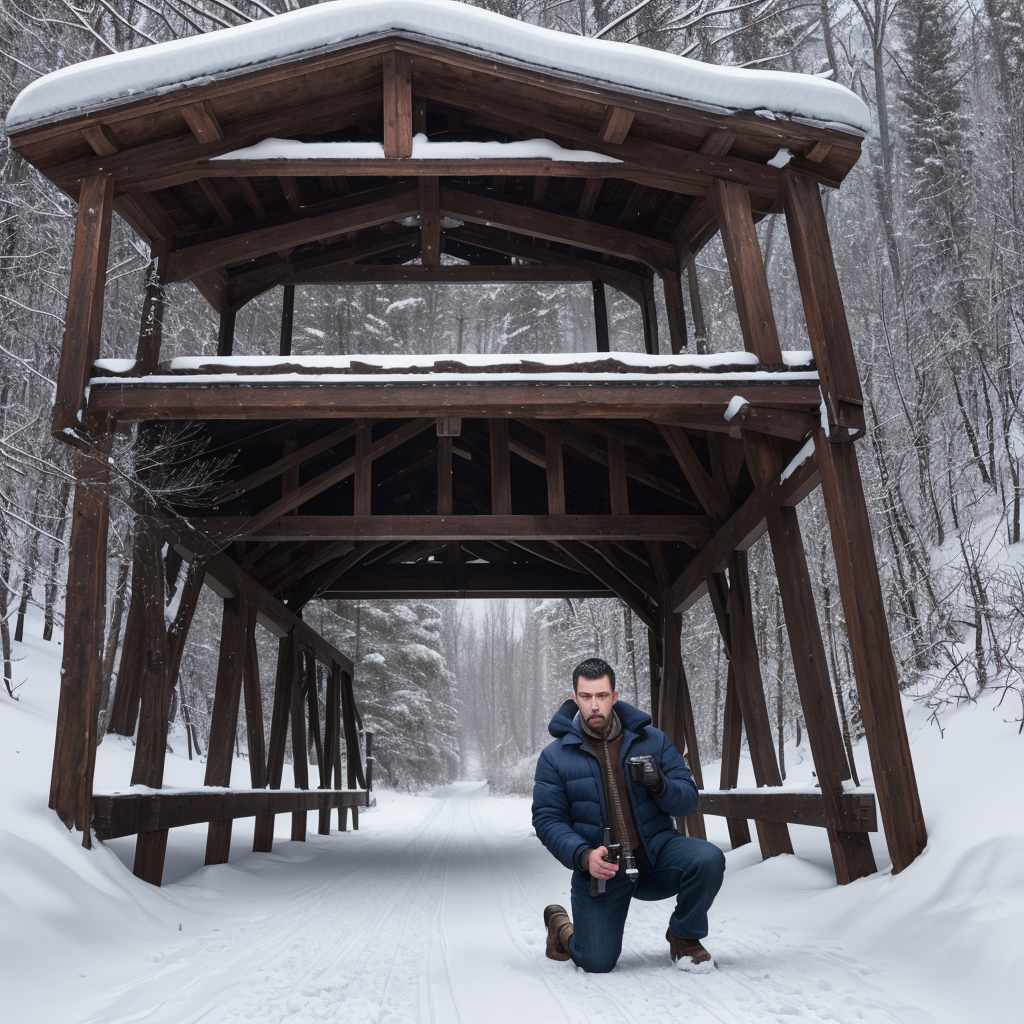
The bridge was a small one. A covered wooden truss over a creek that ran maybe ten feet wide in October. The kind of bridge that only mattered to the four farms above it and the logging operation that came down the hollow twice a year. It had collapsed cleanly, as if someone had taken away the supports underneath and let gravity finish the sentence. The deck lay in the creek bed in three sections. The roof had folded over itself. The center span had broken at the midpoint, where the load-bearing diagonal had met the bottom chord at a gusset plate Edgar had looked at nineteen days before.
He climbed down into the creek. He had a flashlight. The deputy stayed on the road. Edgar walked the wreckage in the gray light and found what he had not found the first time: a hairline crack inside the joint, hidden under the gusset plate, the kind of crack that a person who was thorough would have seen by working a fingernail along the seam and feeling the give. The kind of crack that did not show up unless you were looking for it harder than you wanted to be looking.
He stood there a long time. His knees were wet. His hands were going numb on the cold steel and he kept his hands on the steel anyway.
He did not cry. That came later.
He drove to Almeda’s house at eleven in the morning. He did not call ahead. He did not know what he was going to say.
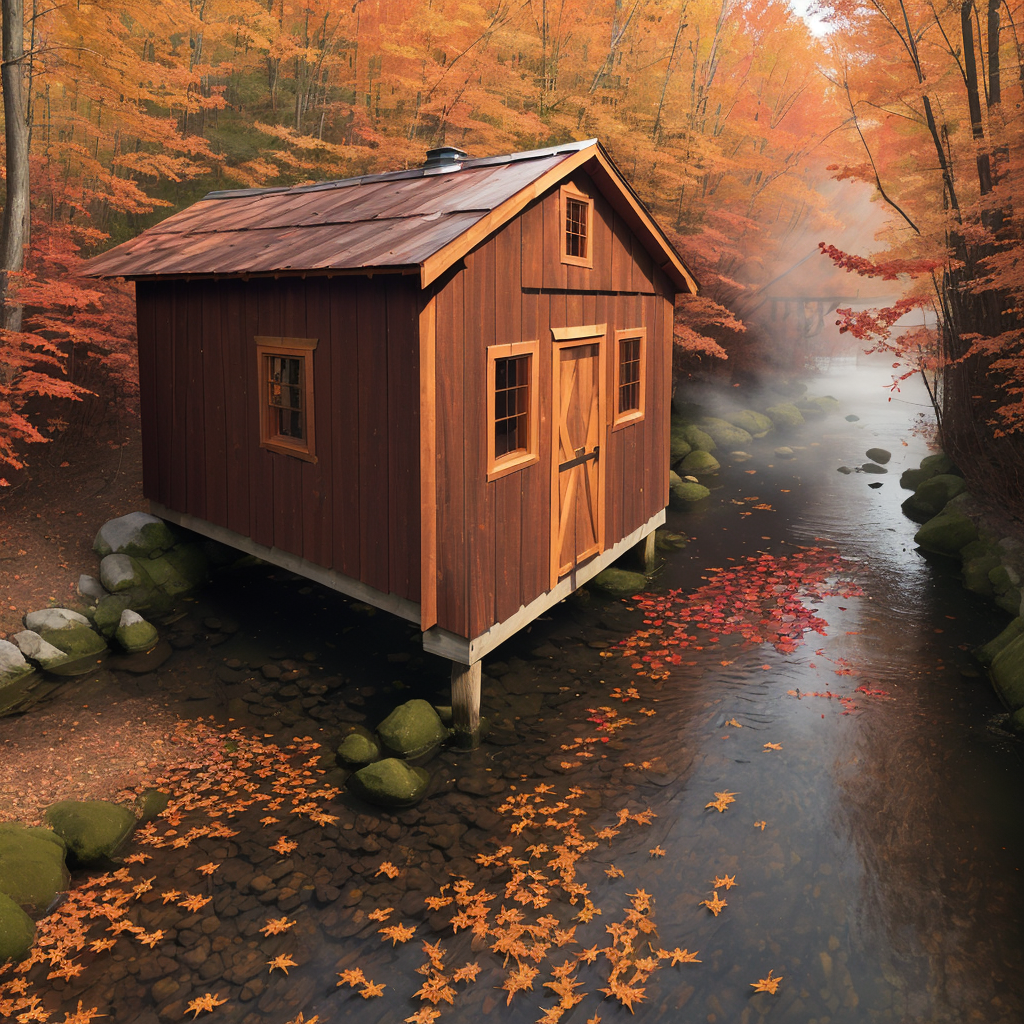
She lived in a frame house at the end of a dirt road outside Bethel, with a wood stove visible through the kitchen window and a black dog that watched him park and did not bark. She came to the door in a flannel shirt and a pair of corduroy slacks and looked at him and said Come inside, Mr. Quinn, and that was all, and he came inside.
She had heard about Dunbar Hollow on the radio at six o’clock that morning. She had been waiting for him.
She made him tea in a pot the color of an old penny. She set down two cups. She sat across from him at a kitchen table with a checked oilcloth on it and a bowl of apples in the center, and she did not ask him what had happened, because she already knew, and she did not ask him whether he had checked it, because she already knew that too.
What she said, after a long quiet in which he could hear the wood stove ticking and the dog breathing somewhere behind him, was this:
When I was twenty-six years old, my supervisor told me the inspection isn’t the form. The inspection is the bridge being safe. The form is just how you keep yourself honest about whether you actually checked.
She picked up her teacup. She did not drink from it. She set it down again.
If you stop checking yourself, she said, the form starts protecting the wrong thing. It starts protecting the inspector instead of the people on the bridge. And the worst part is that you don’t notice when that switch happens. You think you’re still doing the same job. The form says you are. Your supervisor says you are. The pace says you are. But you’ve started signing your name on a different document, and the document doesn’t know it changed, and you don’t know it changed, and the bridge is the only one who knows, and the bridge can’t speak until it falls.
He did not say anything. He held his teacup with both hands.
In nineteen sixty-eight, she said, I did what you did. A different bridge. A different town. I had been on the route for two years and I thought I was getting good at it. I had cut the time on each inspection in half. My supervisor was pleased. I was pleased.
She paused for a long time.
A child died, she said. I don’t say this so you’ll feel worse than you already do. Nobody died at Dunbar Hollow. You got the gift I didn’t get. But I want you to understand what it took for me to learn the difference between completing my job and doing my work, and I want you to learn it from the version of the lesson that didn’t cost anyone.
He started to speak. He couldn’t.
She reached across the table and put her hand on his wrist. Her hand was thin and warm and she did not squeeze.
That difference, she said, is what I tried to give you in the parking lot. It doesn’t fit on a checklist. I’m sorry I didn’t know how to say it more clearly. I have been trying to say it more clearly for fifty-eight years, and I still don’t have the right words for it, and that is the thing I most regret about my career. I regret it more than the bridge. I regret it more than the child. Because if I had known how to say it, maybe other people wouldn’t have to learn it the way I did.
She let go of his wrist.
Drive home, she said. Sleep if you can. Then go back to work. The work is still there. The work was there before either of us. The work will be there after.
He did not sleep.
He went back to the office that afternoon and pulled the inspection logs from the past five weeks and laid them out on the conference room table in chronological order and read every single one of them, slowly, not looking for what he had missed but looking for the rhythm of his own carelessness. He found it. He could see, in the time stamps and the brevity of his cosmetic notes and the suspicious tidiness of his load-bearing checks, the exact week — the second week — when his attention had begun to drift. When the bridges had started to feel like a list to clear instead of a duty to perform. When the form had begun protecting him instead of the people who would drive across the things he was signing his name on.
He went to his supervisor on Monday and asked for the route to be re-inspected. Every bridge. From the first.
His supervisor looked at the budget and looked at Edgar’s face and said we cannot afford that pace, and Edgar said I will work weekends, and his supervisor said I cannot pay you for weekends, and Edgar said I am not asking you to, and his supervisor put his pen down on the desk between them and said nothing for a while, and then said Quinn, I do not know what to do with you, and Edgar said Sir, neither do I, but I know what to do with the bridges.
He started the next morning.
It is November now. Snow has come early. He is kneeling under the gusset plate of a covered bridge outside East Granville with a flashlight in his teeth and his hands going numb on the cold steel, working a fingernail along the seam of a joint, feeling for the give. The form is in his truck. The form will be filled out tonight, at his kitchen table, by a man who has earned the right to sign his name on it. The form will say what the form says. But the form is not the inspection.
The inspection is the bridge.
He cannot see the truck that will cross this bridge in the morning. He cannot see the family in the farmhouse at the bottom of the hollow. He cannot see the children at the school three valleys over who will ride the bus across this span twice a day for the next forty years.
He works the seam with his fingernail. He does not feel the cold anymore. He feels, instead, a kind of careful stillness, the kind of attention that does not announce itself, the kind of work that no form will ever fully describe.
Somewhere, a woman in a flannel shirt is sitting at a kitchen table with a checked oilcloth on it and a bowl of apples in the center and a black dog asleep at her feet. She does not know which bridge he is under tonight. She does not need to know.
She trusts that he is under one.
You Might Also Enjoy
Her Grandmother's Kitchen
Elena has four days to teach her father to cook before she leaves for college. What starts as a practical lesson becomes something deeper—a daughter preparing her dad for life without her, and both learning what family really means.
Not Yet
The coffee maker broke on January 3rd. Not dramatically — no sparks, no flood. It just stopped. Claire stood in front of it at 6:51 AM, holding the empty carafe like a hymnal, and thought: This is how it starts. Six months after Vivian walked out of Henderson & Associates for the last time, two women learn the same lesson from opposite directions — one from an office full of sticky notes, the other from a porch full of terrible sunsets.
The Altitude of Choice
The weather window would close in four hours. 'We turn back,' Pemba Sherpa said at 7,900 meters. But Dr. Lisa Chen needed ice core samples from the death zone—paleoclimate markers that could tell us how fast ice sheets collapsed 12,000 years ago. 'Science is patient,' Pemba said. 'Climate isn't patient,' Lisa replied quietly. 'I'm studying data that could help us understand what's happening now—how fast Greenland and Antarctica might go. People need this information. Billions of people.' They both knew what he was asking. They both knew what she was answering.