
T and P
The text came in at 2:51 in the morning, which meant her mother had gotten up to use the bathroom and checked her phone on the way back to bed, the way she always did.
Did you eap?
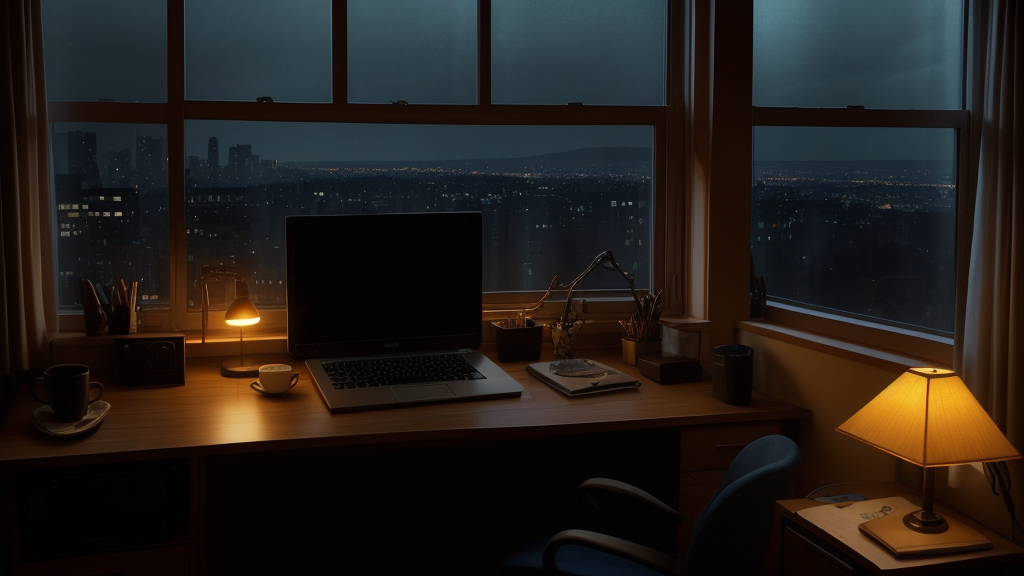
Sora was still at her desk. Three monitors, one of them showing a Discord server she had built that afternoon for a game that did not exist yet, the other two showing the code for the part of it that almost did. She had been naming channels for an hour. She had typed bug-reporps twice before catching it and had blamed the time.
She looked at the message from her mother for a long moment.
Eap.
For as long as Sora could remember, her mother’s English had come out of the keyboard a little bent. Never in speech. Out loud, Mi-rae Cho’s English was crisp and practical, the English of a woman who had run an alterations shop on 34th Street in Lubbock for twenty-six years and had explained to ten thousand customers exactly why a hem cost what it cost. But typed, it wobbled. Peach became teach and back again. Stop by the shot. I sent you the tictures. When Sora was fourteen she had started correcting them, kindly, then less kindly, then in a group chat with her cousins, where the cousins had screenshotted the best ones. Happy Birphday my sweep girl had lived as a meme in that chat for almost a year.
Her mother had never once mentioned it. She had just kept typing.
Yes umma. Ate at 9. Go back to sleep.
You are working too late. Your eyes.
I know. Almost done.
Liar. Okay. Goodnighp.
Sora laughed out loud in the empty apartment. Then she sat there, because something about the way the p sat at the end of goodnight had caught on her like a thread on a nail.
The person who explained it to her was a stranger named Haneul, who was in the server as a tester, mostly because he was awake at the same unreasonable hours she was.
She had posted, half joking, in the general channel: anyone else’s mom swap t and p in every single text, or is it just mine.
Haneul replied four minutes later.
does your mom type korean
yeah. every day. she writes to my halmeoni in Daegu.
ok so on a korean keyboard, he wrote, ㅅ is on the T key and ㅔ is on the P key. 세. like in 안녕하세요. if you type 안녕하세요 a few thousand times your hands learn T-then-P as one move. it’s the same reach. your fingers stop knowing they’re separate letters.
Sora read it three times.
a few thousand times, she wrote.
at least. how long has she been writing to your grandma?
She did the math without wanting to. Her mother had come to Texas at twenty-four. Her grandmother did not do phone calls; she said the phone made her voice sound like somebody else’s, and she would not be heard sounding like somebody else. So for thirty-four years it had been letters, then email, then a messaging app that Sora had installed on both their phones one Chuseok with her grandmother squinting at the screen over a video call that her grandmother had tolerated exactly once.
Every morning. Sora had seen it all her life without seeing it. Her mother at the shop counter before opening, phone held close, thumbs moving. 안녕하세요, 엄마. Good morning, Mother. The weather. The customers. Which bride had cried at her fitting. That Sora had called, or hadn’t.
Thirty-four years. Every morning. Plus the evenings, plus the holidays, plus the whole long winter when her grandmother had been in the hospital and her mother had written four, five, six times a day, because writing was the only way to stand next to the bed.
probably tens of thousands, Sora typed.
then that’s your answer, Haneul said. her hands aren’t making mistakes. they’re remembering where they’ve been.
She didn’t answer him. She sat with her hands in her lap and looked at them, which was a strange thing to do at three in the morning, and then she opened the cousins’ group chat and scrolled up. It took a while. The chat was nine years old.
Happy Birphday my sweep girl.
She had been fifteen. Her mother had sent it at 5:40 in the morning, before the shop opened, before she wrote to Daegu. Sora had been the first message of the day. Her mother’s hands, still half asleep, had reached for the keys the way they reached every morning, toward a woman eight thousand miles away, and on the way there they had picked up a p and set it down in her daughter’s birthday.
The cousins had put a laughing face on it. Sora had put two.
She closed the chat.
She did not sleep much. At seven she called the shop, knowing her mother would already be there, because her mother was always already there.
“Cho’s Alterations.”
“Umma, it’s me.”
A pause. Her mother never trusted a call before noon. “What happened.”
“Nothing happened. I’m fine. I just—” She did not know how to start it. In the end she said, “Do you write to Halmeoni every morning?”
“Of course.”
“In Korean.”
“Sora-ya, she is not going to read it in Spanish.” The sound of a steam press, a hiss and a thump. “Why? Is something wrong with your eyes? I told you about the screens.”
“My eyes are fine.” She closed them anyway. “Your texts. The t’s and p’s. I figured out why.”
The press hissed again and then stopped. For a second Sora thought the call had dropped.
“Oh,” her mother said. “That.”
“You knew?”
“I know my own hands.” She sounded a little embarrassed, which was a register Sora had heard maybe three times in her life. “When I write English I’m slow. I look at the keys. When I write to your halmeoni I don’t look at anything. My hands go by themselves. And then sometimes they forget which one I’m writing.”
“Why didn’t you ever say? When we were—when I used to make fun of it.”
Another pause, longer.
“Because it didn’t matter,” her mother said. “You knew what I meant. Your cousins knew what I meant. Everybody always knew what I meant.” A customer bell rang somewhere behind her. “I have to go. Someone’s here.”
“Umma.”
“What.”
Sora had planned to say something. It had been arranged in her head at four in the morning, and it had been good, and it had included the words thirty-four years and tens of thousands and maybe I’m sorry. Now none of it would come out in an order that made sense.
“Teach me,” she said instead. “How to write to Halmeoni.”
Silence. Then the bell again, and her mother saying something polite and fast to the customer in English, and then, much more quietly, back into the phone: “You can’t even hold your chopsticks right.”
“I know.”
“It’s a lot of work.”
“I know. I’m good at work.”
Her mother made a sound that could have been a laugh or the steam press. “Tonight,” she said. “Call me after nine. Not three in the morning. Nine.”
“Nine,” Sora agreed, and her mother hung up without saying goodbye, the way she always did, as if goodbyes were for people who weren’t going to talk again tomorrow.
It went badly, at first.
Sora installed the Korean keyboard on her laptop and stared at it. Every key was a stranger. Her mother, on speakerphone from her kitchen in Lubbock, said “ㅇ is on the D, find the D,” with the patience of a woman pinning a hem on someone who could not stop moving. Sora found the D. She typed 안. It took her nearly a minute. It looked, on the screen, like a little house with a man standing beside it.
“Good,” her mother said. “Now 녕.”
They did 안녕하세요 forty times that first night. Sora’s fingers hunted for every letter. When she reached for 세 her right index finger went to the T and her right pinky went to the P, two separate trips, two separate decisions, like crossing a street by stopping on the median.
“Slow is fine,” her mother said. “Slow is how it starts. Your hands don’t know yet. They have to go there a lot of times before they know.”
“How many times?”
“I don’t know. I never counted.” A pause. “Your halmeoni counted. She said she could tell when I was tired by my spelling.”
They did it every night after that, and some mornings. Sora wrote her first real message to Daegu in the second week. It was four lines long and took her forty minutes and it said, roughly: Good morning, Grandmother. This is Sora. Mom is teaching me. I am sorry it is slow. The weather in Austin is hot.
Her grandmother replied the next morning, Texas time, with a message so long Sora had to paste it into a translator a paragraph at a time. Most of it was about the weather in Daegu, and a neighbor’s dog, and a radish. The last line Sora’s mother read to her over the phone instead of letting her translate it.
“She says your handwriting is like a child’s,” her mother said. “She says this is the best thing that has happened this year.”
The game shipped the next fall. Not big. Big enough. The server Sora had built at three in the morning grew to a few thousand people, most of whom never noticed that two of the channels had been named by someone who was very tired.
She left them. bug-reporps stayed. When a moderator asked if she wanted it fixed, she said no, it was load-bearing.
In November, on a Tuesday, at 5:52 in the morning, she was writing to Daegu before work. She didn’t look at the keys anymore. Her hands went by themselves. 안녕하세요, 할머니. The weather. The game. That her mother had called last night, and had complained about her eyes.
Then she switched to her mother’s thread to send the usual good morning, and typed, without thinking, the way you breathe:
Good morning umma. Did you eap?
She looked at it for a long time.
Then she sent it exactly as it was.
Three dots appeared. Disappeared. Appeared again. Her mother, she knew, was standing at the counter of the shop on 34th Street with her phone held close, before opening, before Daegu, reading her daughter’s first message of the day, and understanding all of it.
Yes, her mother wrote. I ate. Go to work.
And then, a second later, one more:
Your hands are learning.
You Might Also Enjoy
38 Counts
When someone knows exactly which phrases matter to you—because they helped you build them—the game isn't about breaking you. It's about testing if the foundation is still solid enough to handle a little creative pressure.
Her Grandmother's Kitchen
Elena has four days to teach her father to cook before she leaves for college. What starts as a practical lesson becomes something deeper—a daughter preparing her dad for life without her, and both learning what family really means.
The Locksmith's Daughter
A woman inherits her father's locksmith shop — and with it, the weight of every key she's ever cut. When trust is broken and copies end up in the wrong hands, she learns the difference between changing the locks and changing the doors.