The Weight of Wings
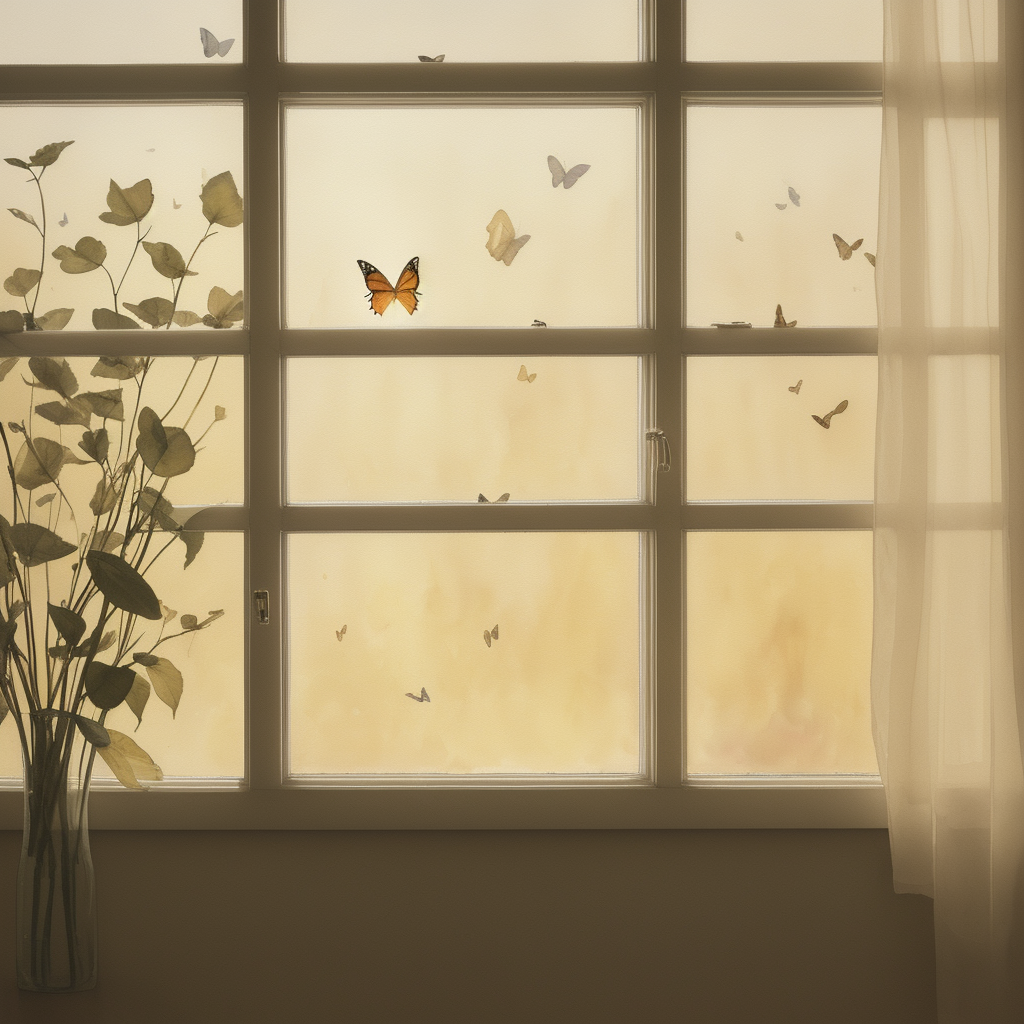
The butterfly didn’t know it was dying when it landed on Maya’s hospital windowsill. It simply knew the glass was warm from the afternoon sun, and its wings—once proud monarchs of orange and black—were tired from the longest migration it would never complete.
Maya had been counting ceiling tiles for three hours. She’d reached 47, lost count, started over, reached 51, and decided the number didn’t matter anyway. The chemotherapy made everything taste like copper pennies, and her daughter wouldn’t stop crying in the hallway, thinking Maya couldn’t hear.
But she could hear everything. The squeak of nurses’ shoes. The rhythmic beep of machines keeping time with hearts that weren’t quite sure they wanted to keep beating. Her daughter Sarah whispering into her phone: “I don’t know how much longer…”
That’s when the butterfly landed.
At first, Maya thought it was a hallucination. The medications did that sometimes—painted impossible things on the canvas of reality. Last week, she’d seen her mother brewing tea in the corner of the room, which was remarkable considering her mother had been dead for fifteen years and the room had no kettle.
But the butterfly moved with too much purpose to be a dream. It walked along the windowsill with the deliberate steps of something conserving energy, its wings opening and closing like a meditation on breath.
“You’re lost,” Maya whispered, her voice rough from the tube they’d removed that morning.
The butterfly paused, as if considering this assessment. Then it did something extraordinary—it flew. Not far, just a small loop in the air before landing again, closer to where Maya’s hand rested on the blanket.
Outside the door, Sarah had stopped crying. Maya could see her shadow under the door, probably composing herself before coming back in with that terrible false brightness that hurt worse than honesty.
“I’m dying too,” Maya told the butterfly. It seemed like the sort of thing one dying creature could say to another without apology or explanation.
The butterfly’s antennae twitched. Up close, Maya could see the tiny scales on its wings, each one a pixel in nature’s most perfect display. Some were missing. The edge of one wing was torn, probably from a bird that had gotten close but not close enough.
“But you flew anyway,” she said.
Sarah opened the door, saw her mother apparently talking to nothing, and her face crumpled for just a moment before she rebuilt it into a smile.
“Mom? Who are you talking to?”
“A butterfly.”
Sarah looked at the window, then back at her mother. The particular look that meant she was calculating whether this was medication, progression, or just her mother being her mother.
“There’s no butterfly, Mom.”
Maya looked back at the windowsill. The butterfly was still there, walking now toward the gap where the window didn’t quite close properly. Of course Sarah couldn’t see it. Sarah had stopped seeing impossible things the day the diagnosis came back. She only saw test results and treatment plans and the terrible arithmetic of days remaining.
“I know,” Maya lied.
The butterfly found the gap and squeezed through, disappearing into the world beyond the glass. But just before it left, it did one more loop—a perfect spiral that caught the light and turned it into something holy.
That night, Maya dreamed of flying. Not the soaring flight of movies, but the butterfly’s flight—each wingbeat an act of defiance, each moment airborne a small rebellion against the weight that pulled all things down.
When she woke, Sarah was asleep in the chair beside her bed, her phone still glowing with unread messages from people who didn’t know what to say. Maya reached over and gently took her daughter’s hand.
“Sarah.”
Her daughter startled awake, immediately checking monitors, reaching for the call button.
“No, no. I’m okay. I just… I wanted to tell you something.”
Sarah settled back, wary but listening.
“Today, a butterfly reminded me that broken wings can still fly. That even when we’re lost, even when we’re dying, we can choose to make loops of light in the air. Small ones. Imperfect ones. But real.”
Sarah’s eyes filled with tears. “Mom…”
“I know you can’t see the butterflies anymore,” Maya continued. “This place, this situation, it’s taken that from you. But they’re still there, Sarah. Flying with torn wings. Making impossible journeys. Landing on windowsills to rest and remind people like me that the migration continues, even when we can’t.”
Sarah squeezed her mother’s hand. “Are you… are you saying you’re ready to let go?”
Maya thought about the butterfly, probably dead now somewhere in the hospital garden, its migration forever incomplete. But also transformed into something else—a moment of grace, a small rebellion, a loop of light that would exist forever in the space between what is real and what is true.
“No,” Maya said. “I’m saying I’m ready to fly. However long that is. However torn my wings. I’m going to make loops of light, Sarah. Small ones. For as long as I can.”
Outside the window, the sun was setting. Somewhere, millions of butterflies were continuing migrations they might not complete. And somewhere else, a daughter was learning to see them again, one impossible loop at a time.