The Weight It Was Built to Carry
The town council wanted an answer by Friday, and Delphine Okafor would not be rushed into one.
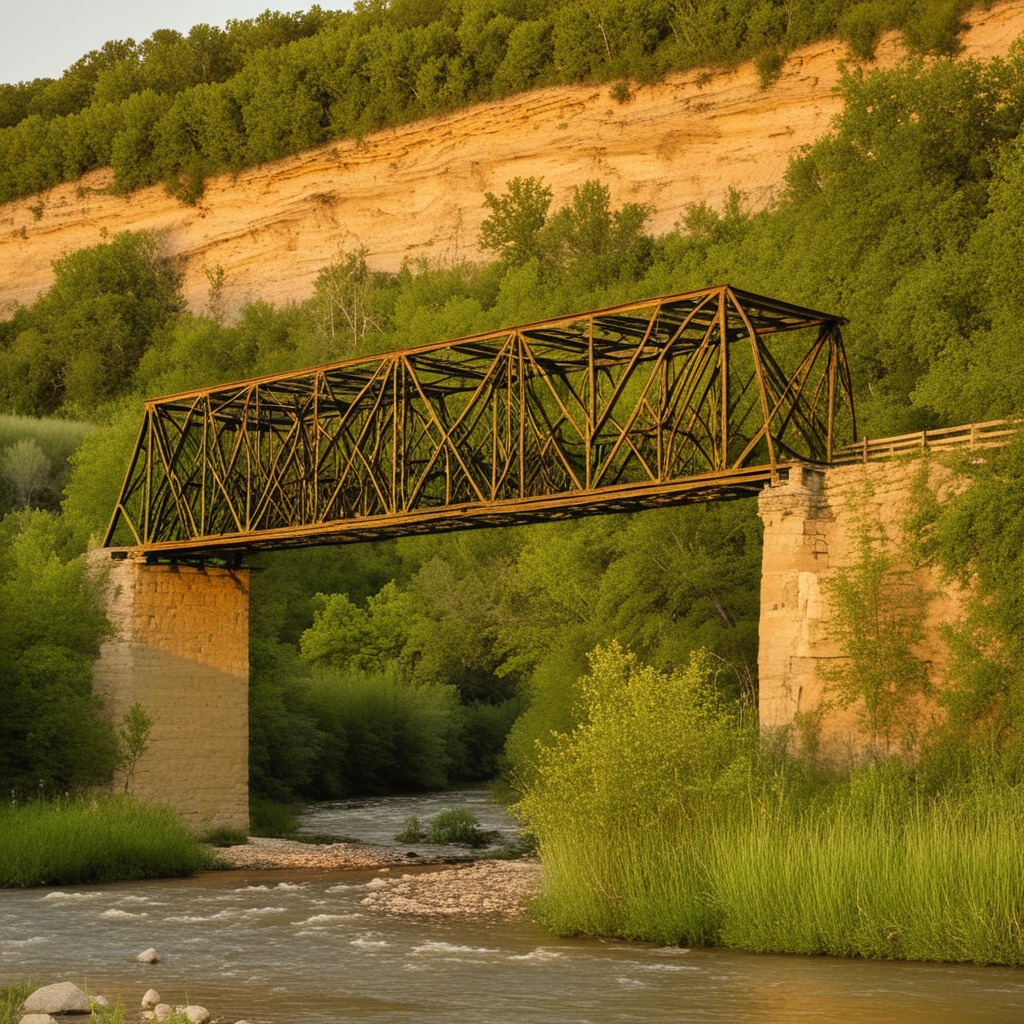
She had been crawling the underside of the Caldwell Street bridge since six that morning, and now it was past four, and the low June sun came sideways through the truss in long copper bars that lit the river to hammered brass below her. The bridge was a hundred and nine years old. A single-span Pratt truss, wrought iron over the narrows where the Verrin River pinched between two limestone shoulders, built in 1917 by men whose names were stamped into a small plaque that nobody had read in forty years. It carried the only road into the old mill district. It had carried funerals and milk trucks and a thousand school buses and, once, in the flood of ‘63, the entire town’s worth of sandbags, load after load, while the water came up to kiss the lower chord and then, grudgingly, went back down.
The county engineer’s office wanted to tear it down. They had a rendering. A clean concrete deck on steel girders, two lanes, a bike path, guardrails that met the current code to the millimeter. It would cost less than the restoration. It would last seventy-five years with a coat of paint. And it would be done by next summer, which was a thing politicians could stand in front of.
Delphine had the rendering folded in her jacket pocket, going soft at the creases. She did not hate it. That was the thing people got wrong about her. They thought because she fought for the old bridges she must hate the new ones, must be some sentimentalist who’d let a child drown rather than pour a fresh footing. She did not hate the rendering. She just did not believe it had earned the right to exist yet, because nobody had yet proven the old bridge couldn’t.
That was her whole profession, when she got down to it. Not loving old things. Refusing to condemn them on a feeling.
She moved along the lower chord on the inspection traveler, a little rolling cradle she’d rigged herself, and put her gloved hand flat against a rivet head the size of a thumb. Cold. Sound. She tapped it with the small hammer she’d carried for nineteen years — her father’s, though that was nobody’s business — and listened to the note come back. A good rivet rings. A bad one thuds, the way a cracked bell goes dead in your chest. This one rang. She moved on. Tap. Ring. Tap. Ring. Eleven hundred rivets in this span and she would touch every one of them before she signed anything, because the whole town was about to ask her a question, and the question was not do you love this bridge. The question was will it hold.
Those were different questions. People who couldn’t tell them apart were the reason bridges came down with cars on them.
The mayor had come out at noon, picking his way down the bank in dress shoes, and stood at the abutment with his hands in his pockets like a man visiting a sick relative he’d already mentally buried.
“Del,” he’d said. “Off the record. Just tell me what you’re leaning.”
“I don’t lean,” she said. “I find out.”
“The Hendersons are selling the mill. There’s a buyer wants to put lofts in. It all dies if the road’s closed another two years for a restoration, and the engineer says we could have the new one—”
“I know what the engineer says.”
“People grew up on this bridge. I get it. My mother’s ashes went over it. But sentiment doesn’t pour concrete, and it doesn’t—”
“You think I’m out here for sentiment.” She’d said it without heat, which was worse than heat, and he’d shut his mouth. “Sentiment would have me sign it sound this morning because I want it to be. Sentiment’s the most dangerous thing I carry down here. I leave it in the truck.” She’d turned back to the rivet line. “If this bridge can’t hold a fire engine at full load, I will be the first one to hand you that rendering and shake your hand. But I’m going to know. Not feel. Know. That’s the only thing the old girl’s earned from me, and it’s the only thing your mother’s ashes earned, and it’s the only thing those kids on the morning bus earned. Go back to your office, Mr. Reyes. I’ll have it Friday.”
He’d gone. They always went.
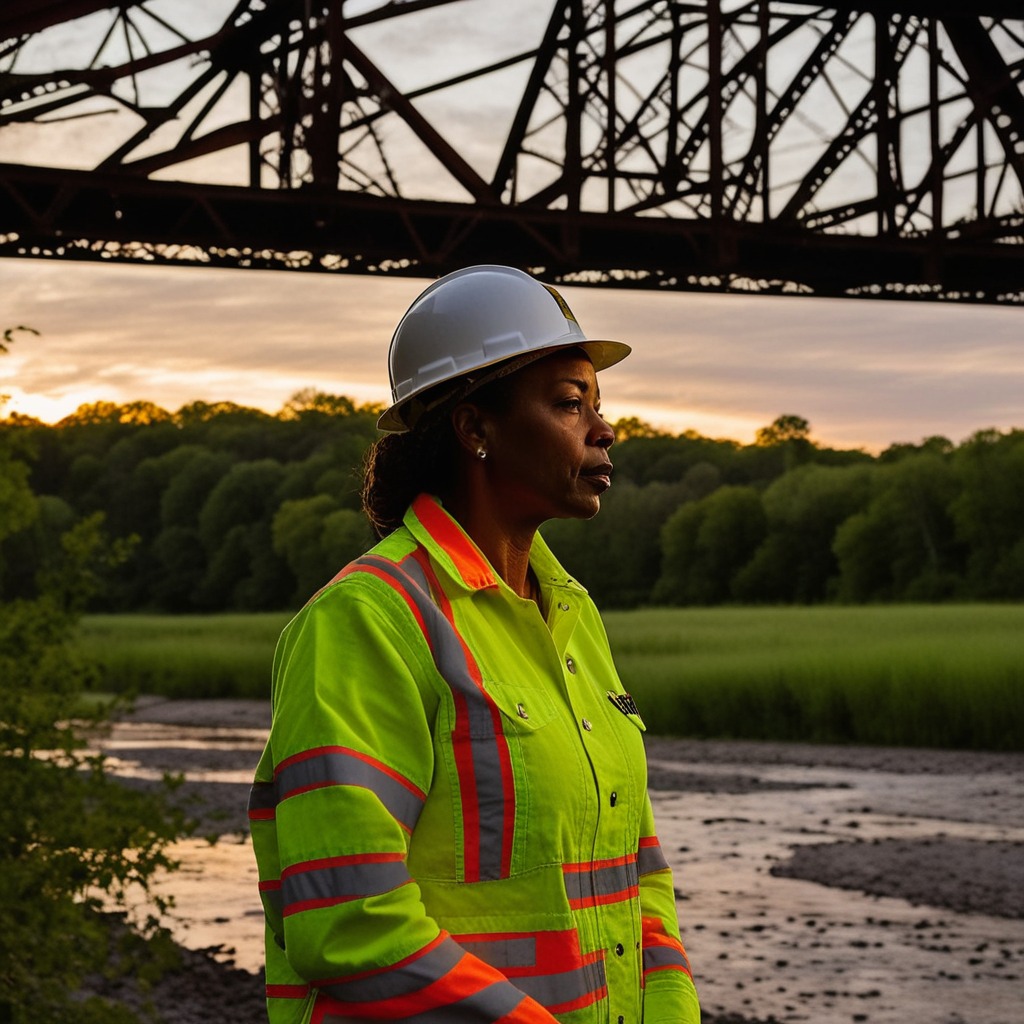
It was the gusset plate at panel point L3 that nearly ended it.
Late afternoon, the light going to amber, and she found it the way you find the thing that matters — not with the eyes but with the hand. A gusset plate is the steel that ties the diagonal members to the chord at each joint; it’s where the load gathers and turns. This one had a bloom of rust at its lower edge, and rust on iron is not always a verdict — surface scale flakes off and leaves good metal beneath, and a lazy inspector logs moderate corrosion and moves on. Delphine was not lazy. She set the rust pick under the scale and worked it, and a sheet of it came away the size of her palm, and underneath was not good metal.
Underneath was a crescent of pitting, deep, and at the bottom of the worst pit, hairline-fine, running back into the plate where no camera and no drone and no quick walkover would ever have caught it: a crack.
She sat back on the traveler and breathed.
This was the moment the whole job lived inside. Because here was the truth nobody at the council table understood: finding the crack was not the answer. Finding the crack was the beginning of the only honest question she’d asked all day. Is this the bridge, or is this one plate?
A lesser inspector went one of two ways here, and both were a kind of cowardice dressed as judgment. The first coward saw the crack and condemned the span — cracked gusset, structurally deficient, recommend replacement — and went home early, and never had to be wrong, because you are never blamed for tearing down a bridge that doesn’t fall. The second coward loved the bridge too much, told herself the crack was old and arrested and probably fine, logged it monitor, and drove home, and that one got people killed.
She was neither. She was the third thing, the thing that took longer and satisfied no one waiting at the top of the bank. She got out her gauges.
She measured the crack’s length. She measured its depth with the eddy-current probe, watching the needle. She marked its tips with paint and she would come back at first light and measure again to see if it had moved — a living crack and a dead crack look identical and behave like opposites. She traced the load path with her finger and her memory of how a Pratt truss carries itself: this plate took tension, and tension is what opens a crack, but the redundancy of the truss meant this joint was not the only thing standing between the deck and the river. She climbed up and checked the corresponding plate on the other side, the bridge’s mirror, and it was clean — which told her this was corrosion, local, a place where a century of road salt had run down one particular channel and pooled at one particular edge, and not fatigue blooming through the whole structure at once. One plate. Not the bridge.
A bad gusset can be replaced. You can cut it out and rivet in new steel that is stronger than what the men in 1917 had, and the bridge does not know the difference, does not love its original metal the way people love it for them. The bridge only knows load. Give it sound steel at L3 and it will carry the fire engine and the school bus and somebody’s mother’s ashes for another hundred years, and the limestone shoulders and the wrought-iron lace and the plaque nobody reads will all still be standing where the town can see them and say that’s ours, we kept that.
But — and she held herself here, on the traveler, in the copper light, because this was the discipline and everything else was just knowing how to use a hammer — but that was only true if the crack was dead, and if the pitting hadn’t gone further than the one plate, and if the floor beams she hadn’t reached yet were as sound as the chords she had. She did not get to decide the bridge was savable because she wanted it saved. She got to find out whether it was savable, and then say only and exactly what she’d found.
So she did not call the mayor. She did not call anyone. She marked the crack, logged it with three photographs and a measurement to the hundredth of a millimeter, and she kept moving down the rivet line into the dimming light. Tap. Ring. Tap. Ring. There were six hundred more to touch before dark, and then the floor beams tomorrow, and then she’d come back and measure the crack again, and if it hadn’t grown, and if the rest held, then on Friday she would tell them the truth she’d earned the right to say:
Don’t tear it down. Fix the one thing that’s wrong, and fix it right, and it will carry you the rest of your lives. I checked. Every rivet. I know.
And if the crack had grown in the night, if it was alive and running, she would hand the mayor his rendering and mean it, and feel the loss like a stone, and sign the death of the thing she’d come to save — because the only thing worse than losing the old bridge was keeping it on a lie and burying somebody under the keeping.
The sun went down behind the mill. The river turned from brass to pewter to the deep moving dark, and the truss above her became a black geometry against the last green of the sky. Somewhere up on Caldwell Street a car slowed at the barricade, idled, turned around. They’d all turned around for nine days now. They’d turn around a little longer.
She switched on her headlamp and put her hand on the next rivet.
It rang.

You Might Also Enjoy
The Bread Detective
Kenji had eaten the same everything bagel from Chen's Corner Bakery every morning for three years. Toasted. Light cream cheese. Exactly $3.50 with tax. Then one Tuesday, Mrs. Chen was out, and her teenage son Omar offered him cardamom honey bread. The cardamom bread changed everything. Not because it was life-altering or spiritual. It was just really good bread. The kind that makes you stop walking and look at it. The kind that makes you text your sister: 'Found the bread. THE bread.' But here's what happened: Kenji started paying attention.
The Clock That Stopped for a Reason
The mantel clock arrived on a Tuesday, carried in by a woman who set it down on Lior's workbench with both hands, the way people carry something that is half-object, half-witness.
The Desk That Stayed
The workbench was eight feet long, built from eastern white pine that had gone the color of dark honey over decades of oil and turpentine soaking into the grain. Three people worked at that bench across fifty years. None of them planned it that way.