The Shape of Thirty Years
Margaret couldn’t sleep.
This wasn’t unusual for a woman of sixty-three. What was unusual was what she did about it. Instead of lying in bed counting regrets, she got up at 1:47 AM, made herself a cup of tea she didn’t really want, and opened the hall closet.
The shoebox was on the top shelf, behind the Christmas decorations she’d put away eleven months ago and the photo albums she kept meaning to digitize. It wasn’t the only shoebox. There were four of them, plus two manila folders, plus a flash drive she’d labeled “voice memos - music stuff” in 2019 and never opened since.
She pulled them all down.
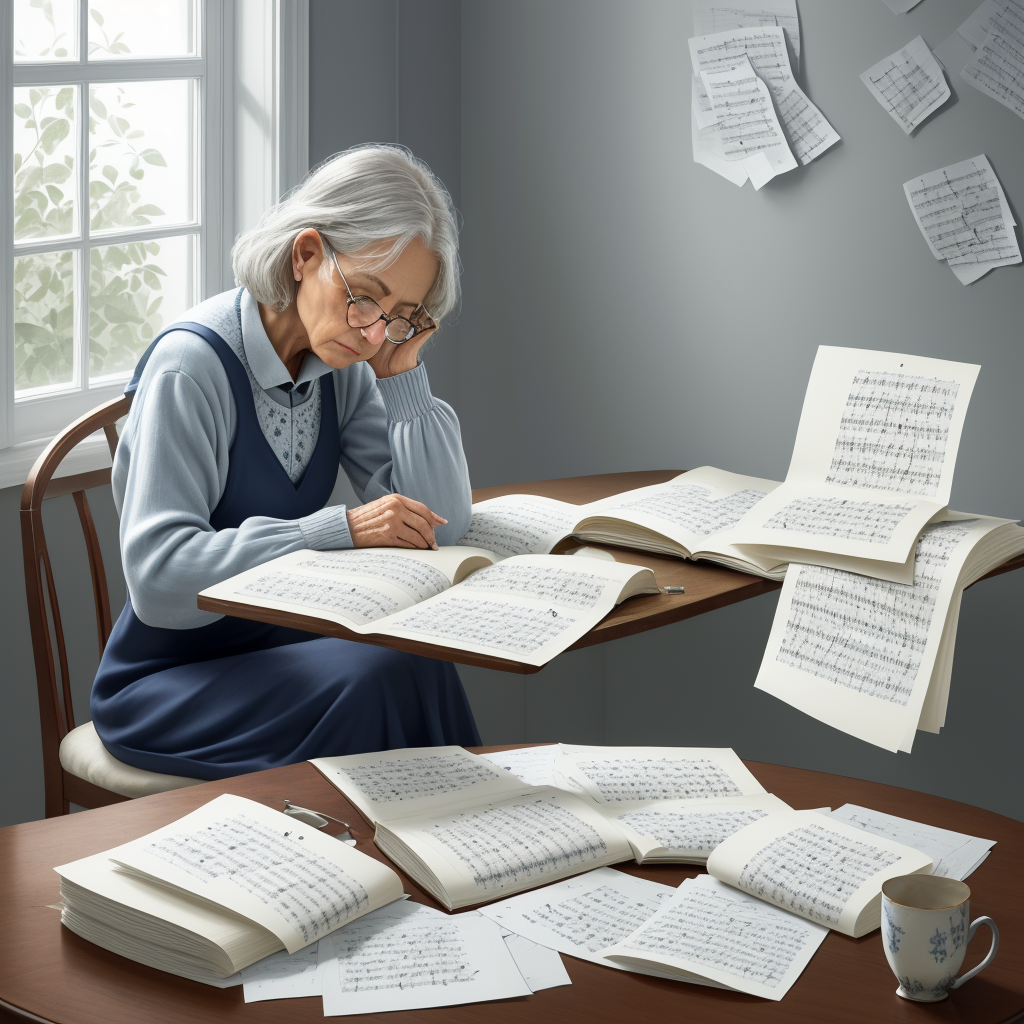
The kitchen table was large—too large now that it was just her. Richard had been gone three years. The kids had their own lives, their own tables, their own 1:47 AMs. Margaret spread the boxes across the empty space like she was preparing for surgery.
The first scrap of paper she pulled out was dated 1994. A napkin from a diner in Beaverton, the logo faded to ghosts. On it, in her handwriting from thirty years ago, a melodic fragment: six notes, a rest, three more. Below it she’d written: sounds like leaving but also like staying.
She remembered writing it. She’d been waiting for Richard to come back from the bathroom, and the melody had arrived the way they always did—unbidden, insistent, gone if she didn’t catch it. So she’d caught it. And then she’d put it in her purse, and eventually in a shoebox, and eventually in a closet behind Christmas decorations.
Because what else do you do with six notes that sound like leaving but also like staying?
Margaret pulled out another scrap. 2003. The back of a bank envelope. A chord progression this time—Am, F, C, G, but with a suggestion that the G should be suspended, unresolved, waiting for something. For Sarah’s graduation, she’d written. Didn’t use it.
She hadn’t used any of them.
For thirty years, Margaret had been catching fragments—melodies that arrived while she was washing dishes, chord changes that appeared during her commute, lyrics that formed themselves from the rhythm of her footsteps on morning walks. She’d written them all down, recorded them on whatever device she had at the time, saved them with a faith she couldn’t explain.
Someday, she always thought. Someday I’ll figure out what these are for.
But whenever she tried to build them into songs, they refused. The 1994 melody didn’t want a verse. The 2003 chord progression rejected every bridge she attempted. A haunting vocal line from 2011—recorded on her phone at 3 AM the week her mother was dying—wouldn’t attach to any beginning or end.
So they went in the boxes. The folders. The flash drives. Evidence of a creative life that never quite cohered into anything she could show anyone.
Until tonight.
Margaret laid them out. All of them. Scraps of napkin and envelope and receipt. Notebooks with only two pages used. Voice memos transferred through four generations of phones. Thirty years of fragments, spread across her too-large table.
She started humming the 1994 melody. Six notes, a rest, three more.
Then, without meaning to, she shifted into the 2003 chord progression. It shouldn’t have worked—different keys, different intentions, different decades of her life.
But her fingers found a transition she’d never written down, and suddenly the melody from 1994 was living inside the chords from 2003, and they were having a conversation that made perfect sense.
Margaret stopped humming. Her hands were shaking.
She reached for the 2011 voice memo—the one from her mother’s last week. Played it on her phone. Her own voice, younger and hollowed by grief, singing a wordless phrase that rose and fell like breath, like heartbeat, like the space between being alive and not.
It was the bridge.
The bridge she’d never been able to write. The thing that connected the leaving-and-staying to the unresolved waiting. It had always been there, recorded in a hospital hallway at 3 AM, labeled can’t sleep - mom and never played again until now.
For the next three hours, Margaret moved through her fragments like an archaeologist. Not creating—recognizing. Every piece she touched seemed to know its place. A lyric from 2007 belonged with a melody from 2018. A bass line she’d tapped out on her desk in 1999 was the foundation for something she’d hummed just last month.
They weren’t unfinished songs. They had never been unfinished songs.
They were movements. Pieces of a single composition that had taken thirty years to write because it needed thirty years of her life to exist. The leaving-and-staying was the first movement—the young mother, the career that wasn’t art, the choice she made and kept making. The unresolved chords were the second—the waiting, the wondering, the hope deferred but never quite abandoned. Her mother’s bridge was the third—the loss that cracked her open, the grief that taught her what mattered.
And the fragments from the last few years—the ones she’d thought were getting worse, more scattered, less coherent—they were the resolution. Not an ending. An arrival.
By 5 AM, Margaret had it all mapped out on paper. Lines connecting scraps across decades. A structure that emerged not from planning but from living. Something that wasn’t a symphony or an album or any form she had a name for.
It was just… her. The shape of thirty years, rendered in fragments that only made sense together.
She didn’t record it. Didn’t try to perform it. Didn’t call her daughter to say I finally understand what I was making.
She just sat at her too-large table as the December sun started to lighten the windows, surrounded by thirty years of pieces, finally hearing the whole.
Margaret had spent three decades thinking she was failing at music—starting things she couldn’t finish, catching fragments that refused to become songs.
But she hadn’t been failing. She’d been composing. One piece at a time, across a lifetime, in a language that only made sense when you had enough years to hear it.
She reached for a fresh piece of paper and wrote down one more fragment. Something that had arrived just now, in the space between recognition and sunrise. A final phrase. A way to end that was also a way to begin again.
Because that’s what you do with fragments. You catch them. You keep them. You trust that someday—maybe thirty years from now, maybe tonight at 1:47 AM—they’ll tell you what they were always trying to become.
Margaret looked at her table full of pieces and smiled.
She finally knew what they were for.
They were for this moment. This exact moment, in this exact kitchen, on this exact December night when she finally had enough life behind her to hear what she’d been making all along.
Not a song. Not an album.
A life. In pieces. Finally whole.

You Might Also Enjoy
First Midnight
The thing about your first midnight is that you don't know what to expect. I'd read about it—fireworks, champagne, that strange melancholy. But knowing isn't the same as feeling.
Hidden Messages
Sarah ran her fingers along the exposed wall studs, decades of paint and wallpaper finally stripped away. There, carved directly into the wood: Henry + Rose, 1952. A message meant to last.
The Inventor of Personal Holidays
Dinah Reeves ran the smallest celebration planning business in Portland. Her wall calendar was covered in dates that meant nothing to anyone except the people who'd asked her to write them down. 'March 14th: Marcus, First Day Without Pain.' She helped people invent holidays for the moments that had changed them.