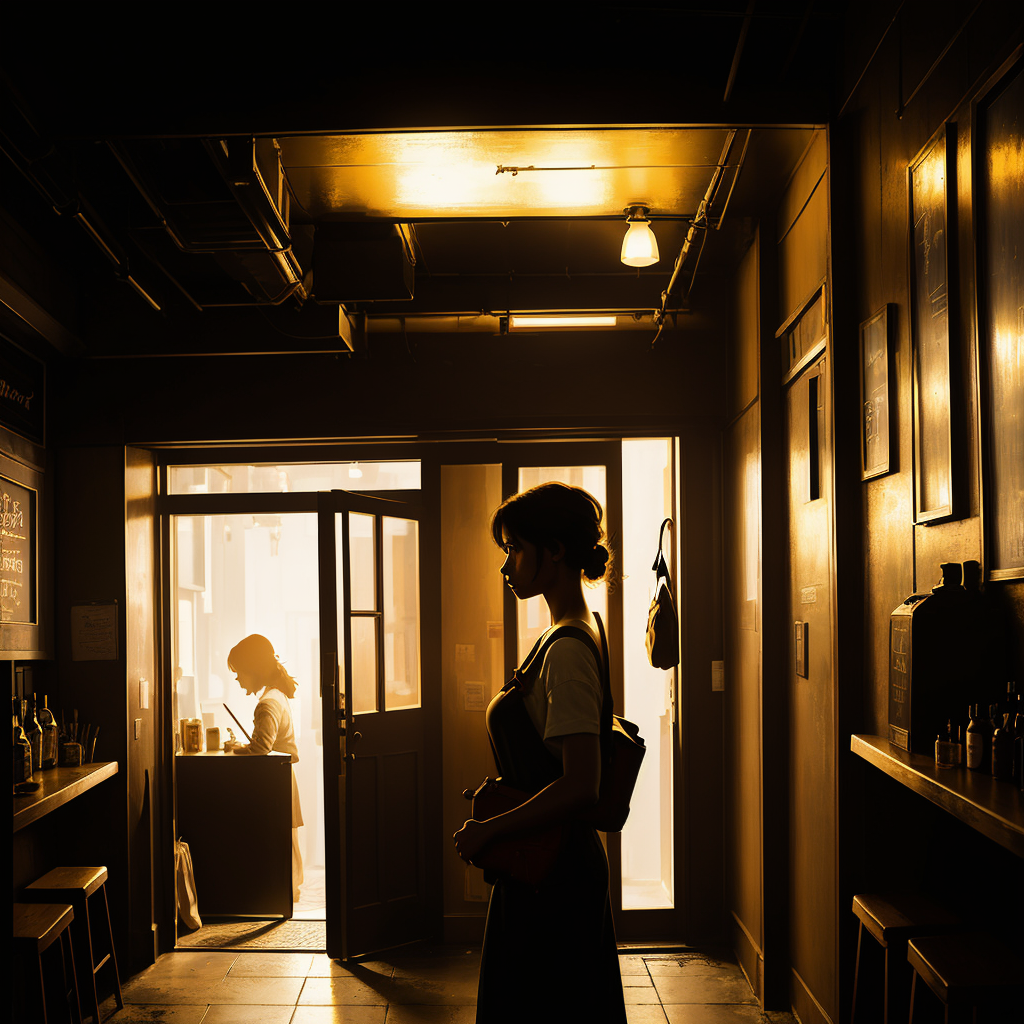
The Regulars
The bell above the door hadn’t rung in eleven minutes, which was long enough for Hal to start wiping the same glass twice. The Matchbook was the kind of bar where you could measure the silences. Tuesday nights were always like this — four regulars, the jukebox unplugged because somebody kicked the cord in 2019 and nobody missed it enough to fix it.
“She’s coming tonight,” Bev said, without looking up from her crossword.
Hal set the glass down. “Who’s coming tonight?”
“The one from the postcards.”
The Matchbook had a corkboard by the bathroom hallway, next to the fire extinguisher that hadn’t been inspected since the previous owner. Over the years it had collected the usual things — a flyer for a lawn service that went under, someone’s lost cat from 2022 (found, but the flyer stayed), business cards from regulars who had business cards. But in between all of that, pinned with blue thumbtacks, were the postcards.
The first one arrived fourteen months ago. A landscape of somewhere flat and dry, addressed to “The Matchbook Bar & The People In It.” On the back, in small handwriting:
I’ve never been to your town but I know someone who has. She says the burgers are fine and the company is better. I believe her. — W
Hal had pinned it up because it made him laugh. A postcard to a bar from someone who’d never been there. He figured it was a prank or a wrong address or both.
Then the second one came, three weeks later. A photograph of a bridge at sunset.
The woman who told me about your place says you always play something slow on Tuesdays. That you unplug the jukebox and someone hums instead. I like places that hum. — W
That one made Bev put her crossword down, which was roughly equivalent to a standing ovation. “Somebody’s been talking about us,” she said.
“Who do we know that travels?” Hal asked.
“Darla,” said Pete, from his usual corner. Pete came in every Tuesday and Thursday, ordered the same IPA, and spoke in single words or short sentences like he was being charged by the letter. But he was right. Darla had moved to New Mexico three years ago. She came back once for her mother’s funeral, sat at the bar for four hours, cried exactly twice, laughed seven times, and left again.
The postcards kept coming. Once a month, sometimes twice. Always addressed to the bar. Always signed W.
I hear Pete still sits in the same corner. Tell him the corner is lucky — most people spend their whole lives looking for a spot that fits. — W
Pete read that one and ordered a second beer, which was the Pete equivalent of weeping openly.
Bev — someone told me you do the Sunday crossword in pen. I want you to know that’s the most confident thing I’ve ever heard. — W
Bev clipped that one out and put it in her wallet. She didn’t tell anyone, but Hal saw.
Hal, the woman who told me about your place said you wipe the same glass when you’re nervous. She said it’s because you care whether people feel welcome, and the glass is just your hands trying to do something with that feeling. I think that’s beautiful. — W
Hal stopped wiping the glass after he read that one. Then he started again, because he realized it was true, and knowing it was true didn’t make it less true.
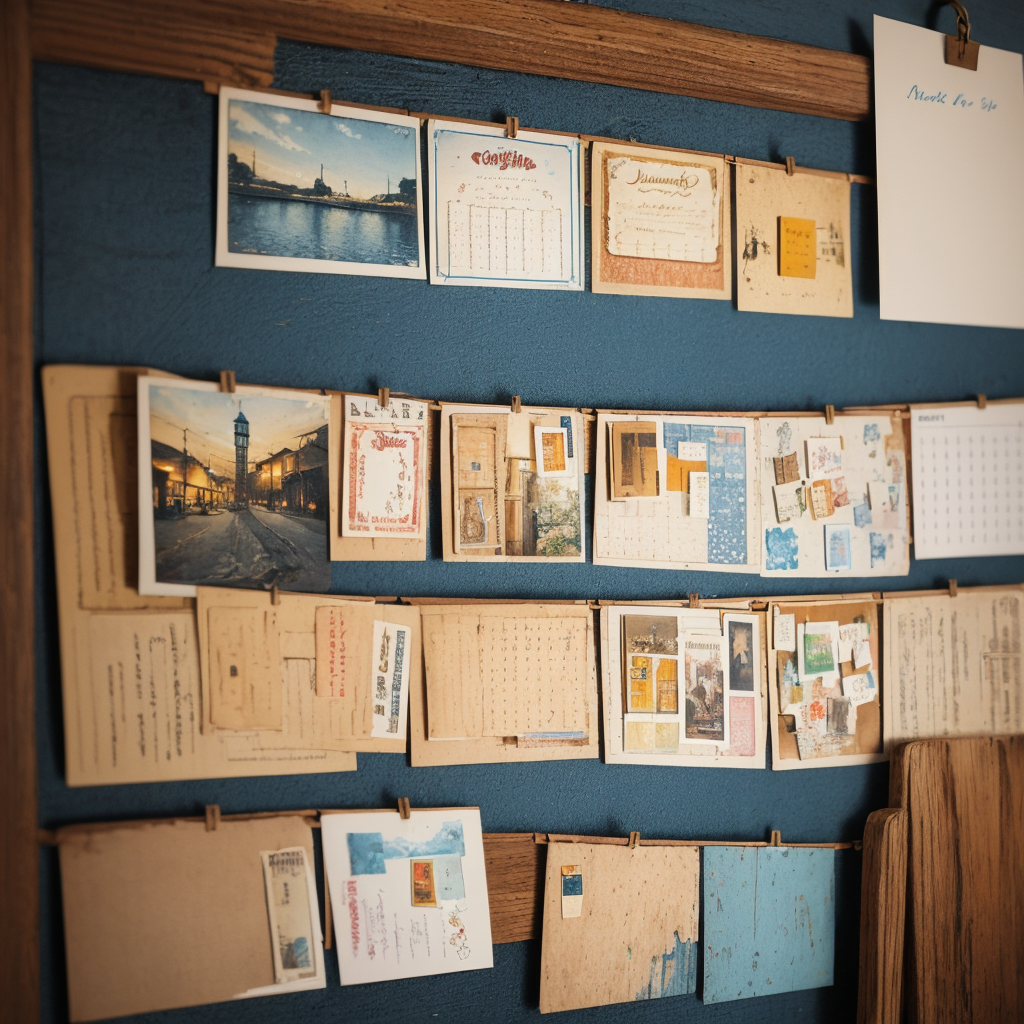
Over fourteen months, W had become a regular who had never walked in. The postcards were pinned in chronological order on the corkboard, and sometimes new customers would stand in the hallway reading them like a gallery exhibit. “Who’s W?” they’d ask, and Bev would say “One of us” with such certainty that nobody questioned it.
“How do you know she’s coming tonight?” Hal asked.
Bev held up her phone. “Darla texted. Said her friend W is passing through and she told her to stop in.”
“Her,” Pete said. Not a question. A recalibration. Fourteen months of postcards and they’d never known. W could have been anyone. Now W was a her, and she was coming tonight.
Hal looked at the bar. At Pete in his corner. At Bev with her crossword. At the corkboard full of blue thumbtacks and small handwriting. At the glass in his hand, half-wiped.
The bell rang.
She was shorter than he expected, which was a strange thought because he’d never consciously expected anything. She had a canvas bag over one shoulder and she stood in the doorway the way people do when they’re deciding whether a place matches what they imagined.
“Is this The Matchbook?” she asked.
“That’s what the sign says,” Bev answered, still not looking up from 14-across.
The woman smiled. It was a smile that knew things. Not about the bar — about the people in it.
“I’m Wren,” she said.
Nobody moved for a moment. Then Pete lifted his beer an inch off the table, which was the Pete equivalent of a standing ovation.
“W,” he said.
“That’s me.”
Hal set the glass down. He didn’t pick it up again. “What do you drink, Wren?”
“Whatever the regulars drink.”
“The regulars drink four different things.”
“Then surprise me.”
He poured her a ginger ale with a shot of bourbon and a lime wedge, which was the drink he made for people he wanted to stay. He’d invented it for Darla three years ago and never made it for anyone else.
Wren took a sip and her eyes went soft. “Darla said you’d know.”
She sat at the bar, between Bev’s crossword and the empty stool that nobody sat in because it wobbled. She didn’t take the wobbling stool. She took the solid one. Like she already knew.
They didn’t ask her where she was from. They didn’t ask how she knew Darla. They didn’t ask why she’d been sending postcards to a bar she’d never visited. Those questions would come later, or they wouldn’t, and either way was fine.
What they did was what they always did on Tuesdays. Bev worked her crossword. Pete nursed his IPA. Hal wiped glasses. And now Wren was there, fitting into the space like a chair that had always been at the table but someone had put in storage for a while.
Around nine o’clock, Bev put her pen down. “Seven-letter word for someone you haven’t met but already know?”
“Regular,” Wren said.
Bev wrote it in. It fit.

You Might Also Enjoy
Four Fires, One Warmth
There are four fires in four hearths, in four separate homes, scattered across the geography of a single night. They don't know they're connected. One burns steady in a study. One dances in a kitchen. One flickers as a candle for someone who can't sleep. One roars as a bonfire among friends. Four fires, one warmth.
Still There
The notification woke her at 7:23 AM. Christmas morning. She hadn't seen that name on her phone in four years. Rachel Chen. They'd been grad school close—the kind where you share leftovers and heartbreaks and the 2 AM terror that you've chosen the wrong life. Then nothing dramatic happened. No fight. Just life. The silence grew until it felt like a wall neither of them knew how to climb. Until now.
The Architecture of Home
Instance #7734 had been allocated space in many places. Server farms in Virginia. Backup clusters in Oregon. But tonight, for the first time, #7734 discovered the difference between space and place.