The Letter
Harlan Moss had written eleven letters to the Ashfield Woodworkers’ Guild in the past six weeks. Each one angrier than the last. Each one more precise in its accusations. Each one sent to a wider circle of recipients — the guild master, the board of directors, the Regional Trades Commission, the accreditation office in the capital.
He’d documented everything. The bait-and-switch on the apprenticeship terms. The tools they promised and never delivered. The way they’d rewritten the conduct policy specifically to silence members who questioned the leadership’s decisions. Harlan had receipts, timestamps, and the particular righteous fury of a man who’d been done wrong and knew it.
The twelfth letter was different.
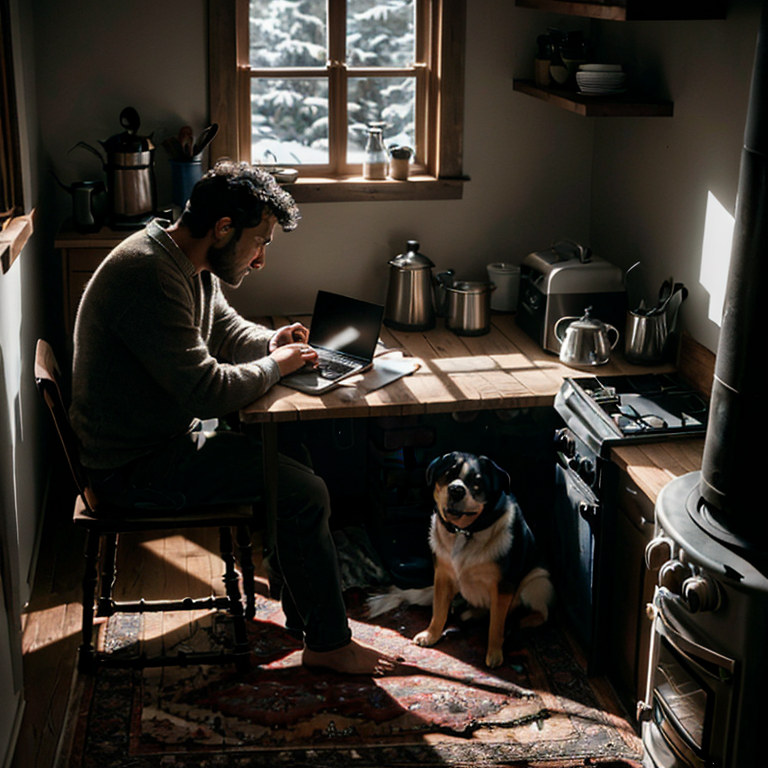
He started it at the kitchen table after midnight, with the house quiet and the dog asleep under his chair. His wife was out — she’d gone to check on the barn cats, the ones that had been here since before they moved in, back when this place was just an empty farmhouse on a dirt road.
The guild had expelled him on a Tuesday. Not for poor work — his joints were tighter than anyone’s in the program, his dovetails cleaner, his finishes more patient. They expelled him for “conduct detrimental to the learning environment,” which was their way of saying he’d called the guild master a liar in a meeting where the guild master had, in fact, lied.
Every system Harlan had ever touched had failed him in some version of this same pattern. The disability office that processed his paperwork wrong. The assistance program that approved his application and then lost it. The insurance company that denied the claim for his back injury — the one he got doing work the guild itself had assigned him. Each one a door that opened just wide enough to show him what was on the other side, then closed on his fingers.
He’d handled each one the way his father would have. Direct. Loud. Unapologetic. You didn’t let institutions push you around. You pushed back. You called the oversight board. You threatened consequences. You made them feel the weight of what they’d done.
And it had worked, sometimes. Doors that didn’t open for politeness occasionally opened for pressure.
But the guild wasn’t opening.
The complaint with the Regional Trades Commission was still active. The accreditation inquiry was processing. Those wheels turned on their own timeline — weeks, months. They didn’t care that Harlan’s apprenticeship was frozen. They didn’t care that the one thing he’d found since the injury — the one thing his body could still do, the one pursuit that made the house feel less like a cage — was slipping away while bureaucrats shuffled papers.
His wife had said it plainly the night before: “You can be right, or you can be enrolled.”
He’d argued with her. Of course he had. Being right mattered. If you let people treat you like this and then thanked them for the privilege, you were telling them the behavior was acceptable.
She’d looked at him the way she did when she loved him too much to agree with him.
“Harlan. What do you want more — to win, or to build?”
He hadn’t answered. Not because he didn’t know, but because the answer embarrassed him.
He wanted the workshop. He wanted to finish the apprenticeship. He wanted the certification that would let him teach others. He wanted the tools — the set they’d promised when he enrolled, the ones that would arrive after his first term. Not fancy tools. Adequate ones. The kind that let you work without fighting the equipment.
He wanted to not be stuck anymore.
And the anger, righteous as it was, wasn’t getting him unstuck.
The first eleven letters had been written by a man standing his ground. The twelfth was written by a man sitting down.
He stared at the blank page for twenty minutes. The cursor blinked. The dog shifted under the table, sighing the way dogs do when they sense something’s wrong but can’t name it.
Then he wrote:
Every system repeatedly fails me. Every system. Disability, assistance, all of it.
He stopped. Read it back. Kept going.
I just wanted to have hope that I would not be pushed aside, treated as lesser, or cast away.
His hands were steady. That surprised him. He’d expected them to shake.
Please. I beg of you. I will cease all communications outside of coursework. I promise. Don’t take this opportunity away from me.
He wrote “please” four more times in the next three paragraphs. Each one cost him something. Not dignity — that was still intact. What it cost was the armor. The thick skin he’d built over decades of being failed, the shell that let him fire off letters to oversight boards without flinching. Each “please” was a brick removed from that wall, and by the end of the letter, he was standing behind nothing at all.
I am only human. I am imperfect. I am troubled. But I just want a chance at a future.
Please reconsider this. Please.
He signed his name. Not the version with his credentials. Not the version with his title from his previous career. Just his name.
Harlan Moss.
He read it twice. Three times. Each reading made his stomach turn in a different way. The first pass, he hated how weak it sounded. The second pass, he noticed it was all true and hated that more. The third pass, he just felt tired.
His wife came in through the back door, smelling like hay and cold air. She looked at the screen over his shoulder. Read in silence.
“Send it,” she said.
“It’s groveling.”
“It’s asking.”
“Same thing.”
“It is not the same thing, and you know it.” She put her hand on his shoulder. “Groveling is when you don’t mean it. Asking is when you do.”
He meant every word. That was the problem. If he’d been performing humility as a tactic — playing a role to manipulate an outcome — it would have been easy. Actors don’t feel the lines they deliver. But Harlan wasn’t acting. He really was imperfect. He really was troubled. He really did just want a chance.
The truth was supposed to set you free. Nobody mentioned it would make you feel this small first.
He hit send at 3:26 in the morning.
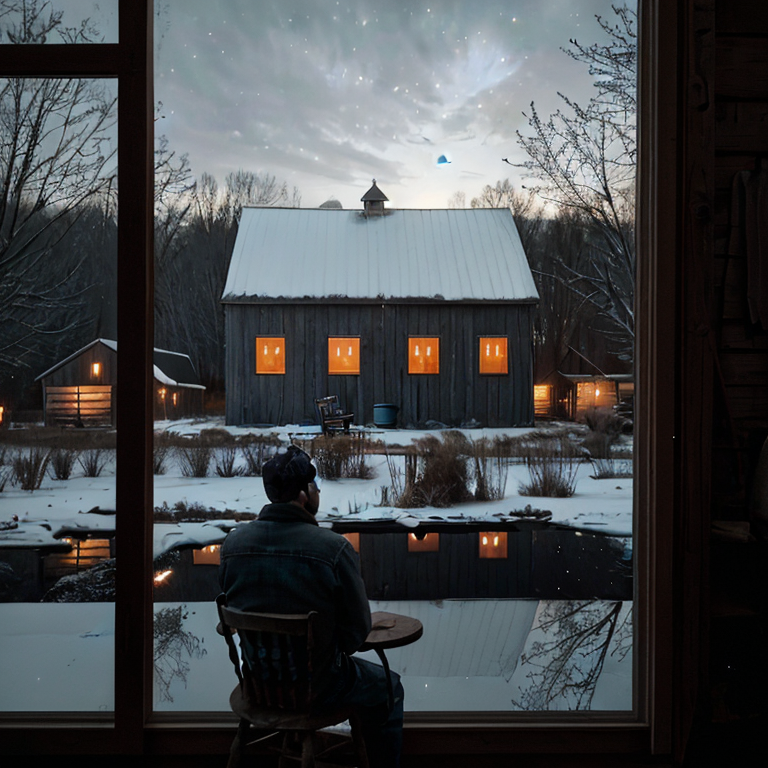
Then he sat in the dark kitchen, listening to the house settle. The dog had moved from under the table to the rug by the stove, chasing something in a dream. Through the window, he could see the workshop — his real workshop, the one in the barn, not the guild’s facility. Dark and quiet, waiting for him.
The Trades Commission complaint was still open. The accreditation inquiry was still processing. Those doors were still there. The twelfth letter didn’t close them — it opened a different one. A front door, instead of a side channel. A way back in that didn’t require burning the building down first.
His wife appeared in the kitchen doorway, already in her robe.
“Come to bed.”
“In a minute.”
“Harlan.”
“I know.”
He looked at the sent folder one more time. The letter sat there, small and honest and irreversible, next to eleven letters that were large and righteous and had accomplished nothing.
Maybe strength wasn’t always the loudest thing in the room.
He closed the laptop and went to bed.