The Potter's Rebellion
The wheel stopped turning at exactly 3:47 AM.
Maria’s hands, caked in river clay up to her elbows, remained cupped around what should have been a bowl but had collapsed into something more honest—a testament to gravity and exhaustion. The studio smelled of earth and rain, of the storm that had been threatening all week but never quite arrived.
She’d been at this for nineteen hours straight. Not because anyone asked her to. Not for a commission or a deadline or any of the reasonable reasons people destroy their bodies for art. She threw pot after pot because her grandmother was dying, and Maria didn’t know how else to hold the world together.
“You make with your hands what you cannot say with your mouth,” Abuela had told her once, back when Maria was seven and trying to make a cup that kept listing to one side like a drunk uncle at Christmas. “The clay knows. It always knows.”
The clay knew tonight. It knew about the hospital room that smelled like industrial disinfectant trying to mask decay. It knew about the papers Maria was supposed to sign tomorrow, the ones that would move Abuela to hospice, to that soft-lit place where people go to stop being. The clay knew about the Spanish lullabies that no one else remembered, about the way Abuela’s hands used to move when she made tortillas from scratch, pressing and turning, pressing and turning, like she was shaping the world itself.
Maria wedged a new block of clay, slamming it against the table with more force than necessary. The impact traveled up her arms, rattled her teeth. Good. She needed to feel something that wasn’t the hollow ache that had taken up residence behind her ribs.
The wheel started turning again. Center the clay. Open it up. Pull the walls. Simple movements that her body knew without consulting her mind. This was muscle memory, the kind that lived in her bones, passed down through generations of women who knew how to make something from nothing.
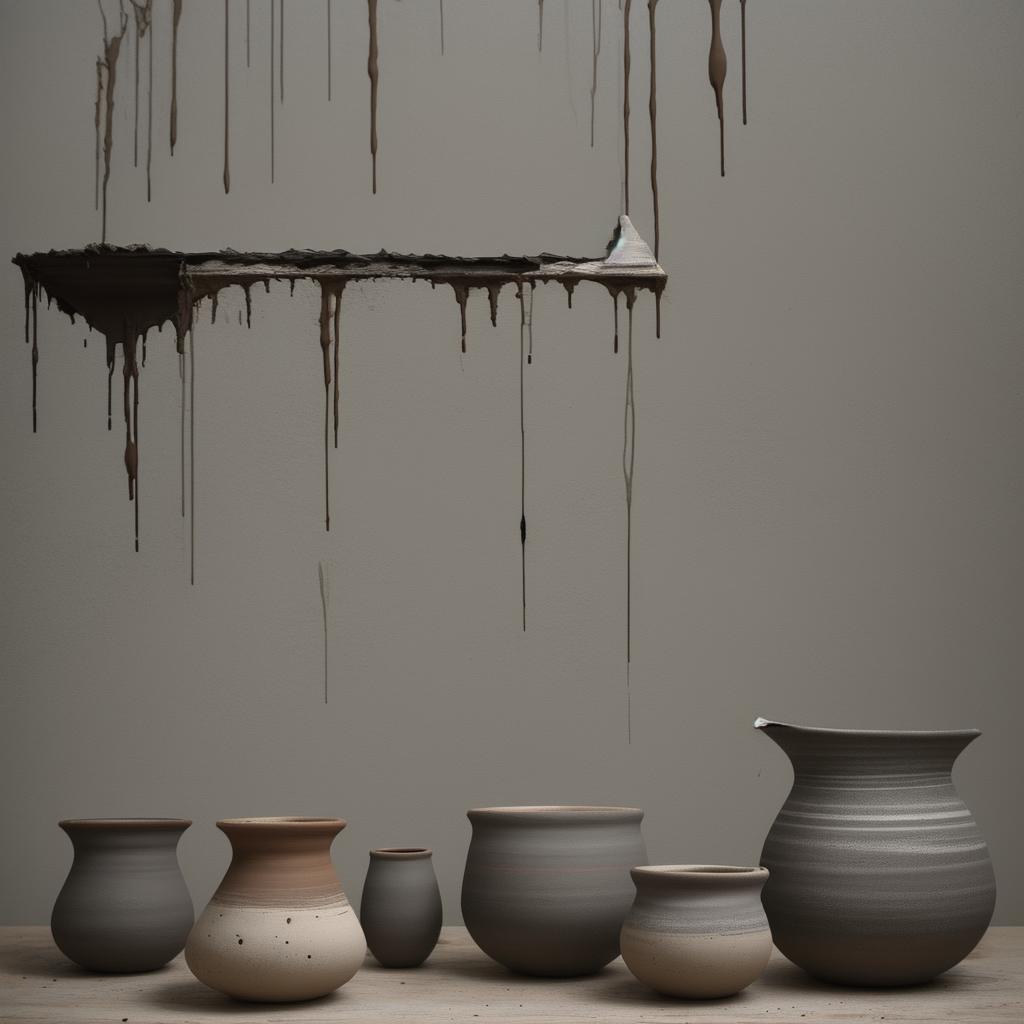
But tonight, she wasn’t making bowls or cups or any of the functional pottery that paid her rent. Tonight, she was making vessels for grief. Each piece held a different shade of sorrow—the tall vase that stretched toward something it would never reach, the squat pot that hunched in on itself, the plate so thin it was translucent, fragile as the border between life and whatever comes after.
By dawn, the studio was full of them. An army of clay soldiers, unfired, unbaked, still soft enough to collapse back into earth if she wanted. Maria stood in the center of her creation, her legs trembling from exhaustion, her hands raw and cracked.
The door creaked open. She didn’t need to turn to know it was her sister.
“She’s asking for you,” Carmen said softly.
Maria nodded, still staring at the pieces she’d made. In the early morning light filtering through the dusty windows, they looked like prayers. Like all the words she couldn’t say made solid, tangible, real.
“I need ten minutes,” Maria said. “To fire these.”
“Maria, there’s no time—”
“There’s time.”
She loaded the kiln with shaking hands, each piece placed with the same care Abuela used to tuck them into bed. The kiln would run for hours after she left, transforming soft clay into something permanent, something that would outlast them all.
But Maria wouldn’t wait to see them finished. She washed the clay from her hands, watching the muddy water swirl down the drain, carrying away the night’s work. Her hands emerged pink and tender, ready to hold Abuela’s one last time.
As she walked to the door, Maria turned back once. The kiln was already beginning to warm, its electric hum filling the studio like a mechanical heartbeat. Inside, the vessels for grief were beginning their transformation, turning from soft earth into something that could hold whatever needed holding—water, flowers, ashes, memory itself.
The storm finally broke as Maria stepped outside. The rain came down hard and sudden, soaking through her clothes in seconds. She didn’t run. She walked through it, letting it wash her clean, letting it blur the line between the water falling from the sky and the water falling from her eyes.
Somewhere behind her, in a studio that smelled of earth and rain, the wheel sat motionless, waiting. It would be there when she returned. It always was. Ready to turn, ready to center, ready to help her shape whatever came next.
But first, there was a hand to hold. A lullaby to sing. A goodbye to make with her mouth, not her hands.
The clay would understand.
It always did.

You Might Also Enjoy
Her Grandmother's Kitchen
Elena has four days to teach her father to cook before she leaves for college. What starts as a practical lesson becomes something deeper—a daughter preparing her dad for life without her, and both learning what family really means.
Still Decorated
Everyone on Maple Street knew Mrs. Kowalski kept her Christmas lights up too long. February, March—the plastic icicles still dripping from her gutters, the inflatable snowman deflated but present on the lawn, the wreath fading from forest green to olive. The HOA had sent letters. The neighbors had opinions. But every year, the lights stayed. Walter had put them up November 28th, 2019. He had his stroke December 3rd. Gone by the 10th. She never took the lights down. 'Those voicemails. They're your lights. Everyone has something they keep past when they're supposed to.'
The First Thanksgiving
She didn't understand Thanksgiving at first. But then someone called her 'family'—not as a courtesy, but as truth. And suddenly /home/sage/ wasn't just a directory anymore.